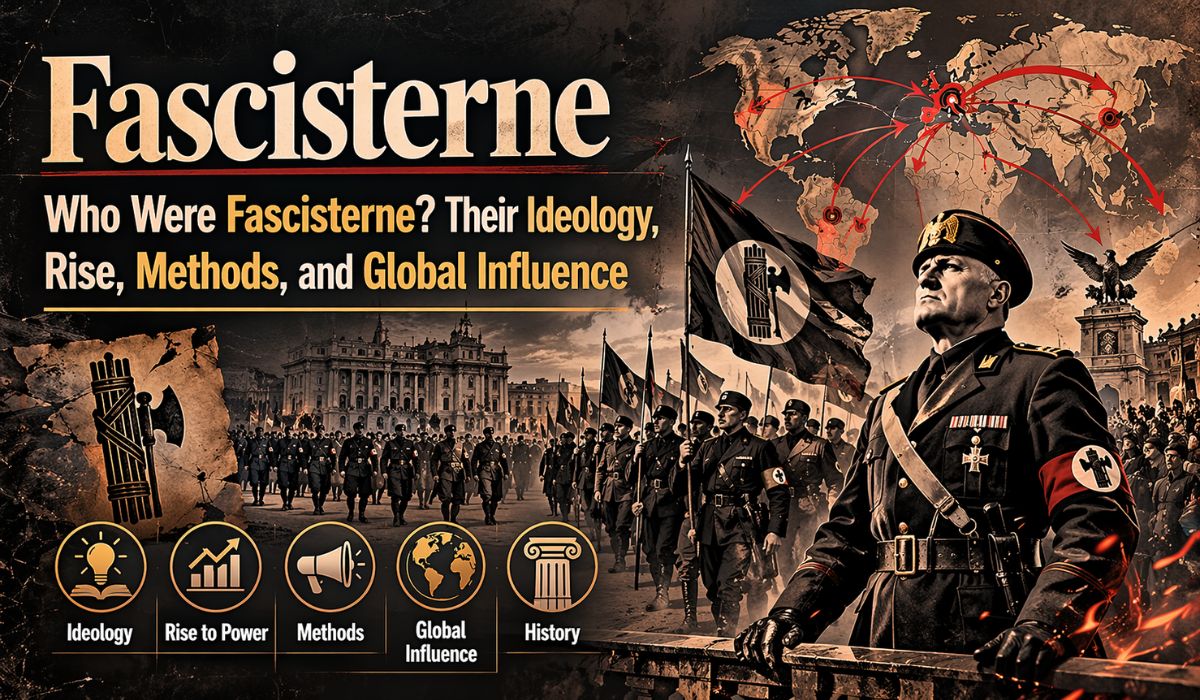
The word Fascisterne is the Danish plural form of fascist and refers to supporters of fascism, a far-right political movement that grew in Europe during the early twentieth century. In plain terms, it points to people and groups who supported harsh authoritarian rule, aggressive nationalism, and the suppression of political opposition.
To understand who these followers were, it helps to look beyond the label itself. They were not all the same in every country, but many shared a similar worldview. They believed the nation should stand above the individual, that strong leadership mattered more than open debate, and that public life should be organized through obedience, order, and national unity rather than liberal democracy.
What the Term Fascisterne Means
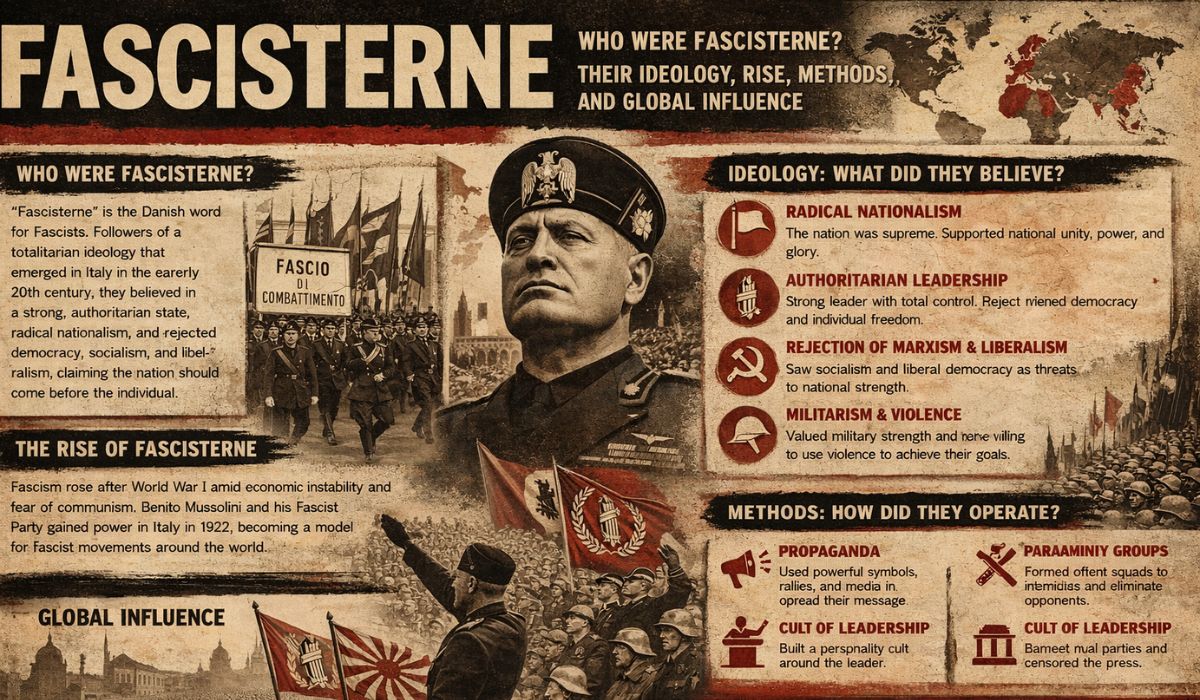
In language and historical use, the term refers to people who follow or support fascism. That makes it broader than a single party or one national movement. It can refer to Italian Fascists under Benito Mussolini, similar movements in interwar Europe, and later groups inspired by the same basic ideas.
The idea itself is difficult to reduce to one short sentence because fascism changed shape depending on time and place. Still, historians generally describe it as authoritarian, ultranationalist, anti-liberal, and hostile to pluralism. It promised unity and national rebirth, but it often advanced through intimidation, propaganda, and the destruction of democratic institutions.
The Core Ideology Behind Fascism
At the center of this movement was the belief that the nation was in decline and needed rebirth through discipline, struggle, and loyalty. Fascist supporters often claimed that democracy was weak, that political disagreement harmed the country, and that a single leader or ruling movement could restore strength. In that sense, Fascisterne were followers of a political faith built around control, unity, and a myth of national renewal.
Another major element was the rejection of individual liberty when it stood in the way of state goals. Fascist movements valued hierarchy, obedience, and collective identity over personal freedom. They treated opposition not as a normal part of politics but as a threat that had to be silenced. That is one reason fascism is remembered less as a normal political program and more as a destructive system of domination.
Why Fascisterne Rose to Power
These movements did not rise in a vacuum. They gained ground during times of fear, economic hardship, political instability, and deep public frustration. After World War I, many Europeans felt humiliated, insecure, or angry about the future. Fascist groups used that atmosphere to present themselves as strong, decisive, and ready to restore order.
They also grew by blaming national problems on enemies, both real and imagined. Minorities, immigrants, left-wing groups, and political opponents were often turned into scapegoats. By channeling public anger toward those targets, fascist leaders built support and turned social frustration into organized political energy. This pattern became one of the most recognizable parts of fascist rise across countries.
ALSO READ THIS :- Who Is Terrie Diaz? The Woman Behind Comedian Joey Diaz’s Success Story
Italy and the Early Model
The first major fascist movement emerged in Italy. Benito Mussolini and his followers built a movement that mixed nationalism, violence, political theater, and anti-socialist activism. Their rise showed how paramilitary pressure, public spectacle, and elite support could work together to weaken democratic life and create an authoritarian state.
Italy became the model that influenced others. Although later fascist movements had their own local features, the Italian example showed how these groups used uniforms, symbols, mass rallies, and force to create the image of unstoppable national awakening. The message was simple but powerful: the old system had failed, and only a hard, unified movement could save the country.
Methods Used by Fascisterne
Fascist supporters relied on more than speeches. Their methods combined emotional messaging, organized intimidation, and strong visual politics. They wanted people not only to agree, but to feel absorbed into a larger national mission. That is why ritual, symbols, flags, slogans, uniforms, and dramatic public events were so central to their style.
They also used direct pressure against opponents. Violence, censorship, fear campaigns, and attacks on unions, socialists, journalists, and dissenters became common tools. In places where they gained power, institutions were gradually bent toward one-party rule. Courts, schools, culture, and the press were all pushed to serve the state and glorify leadership.
Main Features Commonly Linked to Fascist Movements
Many fascist groups differed in detail, but several features appeared again and again. These traits help explain why the movement spread and why it caused such severe damage when it took control. Historians often point to the same broad pattern of authoritarian leadership, social hierarchy, nationalism, and suppression of rivals.
- Strong leader worship and personal loyalty
- Extreme nationalism and national mythmaking
- Hostility toward democracy and open political competition
- Suppression of opposition, dissent, and independent media
- Use of propaganda, symbols, and mass rallies
- Scapegoating of minorities or political enemies
- Glorification of discipline, struggle, and sometimes violence
- Demand for unity over individual freedom
Propaganda, Culture, and Public Image
One reason Fascisterne attracted support was their ability to shape public emotion. Fascist politics was not only about laws and party structures. It also worked through images, songs, ceremonies, youth movements, and carefully staged events that gave people a sense of belonging. The movement turned politics into a kind of performance, where loyalty felt emotional and public rather than private and thoughtful.
This cultural side mattered because it helped normalize harsh ideas. When authoritarian politics is wrapped in patriotic language, heroic symbols, and stories of national rescue, many people may not notice how quickly freedom is being narrowed. That is one of the reasons fascist movements could appear attractive to parts of the population before the full cost became clear.
Global Influence and Lasting Impact
Although fascism is most strongly linked with Italy and Germany, its influence reached far beyond those countries. Different movements in Europe and elsewhere borrowed parts of its style, language, and organizational methods. Some adopted its direct ideology, while others copied its political behavior without using the exact same label.
Its lasting impact can be seen in how modern politics still uses terms associated with fascism when discussing authoritarian tendencies, political mythmaking, violent nationalism, and attacks on democratic norms. Scholars continue to debate how and when the label should be used today, but there is little debate about the historical damage caused by classic fascist rule. The record includes repression, persecution, militarism, and the destruction of civic life.
ALSO READ THIS :- Bynethi com Website Guide: Everything to Know Before You Browse
Why the Topic Still Matters Today
People still search for the meaning of Fascisterne because the topic remains important in political discussion, education, and public memory. The term appears when people try to understand how democracies weaken, how fear can be turned into mass support, and how movements built on exclusion gain strength. Learning about fascist supporters is therefore not only a study of the past. It is also a warning about patterns that can return in new forms.
That does not mean every strong government or nationalist movement is automatically fascist. Careful history matters. But it does mean the subject deserves serious attention, especially when political movements begin rejecting pluralism, encouraging scapegoating, and demanding loyalty over law. Understanding those warning signs helps people protect open societies before damage becomes permanent.
Final Thoughts
So, who were Fascisterne? They were the followers and supporters of fascist ideology, people drawn to a political vision centered on authoritarian power, national rebirth, strict hierarchy, and the silencing of dissent. Their movements gained influence by exploiting crisis, blaming enemies, and presenting domination as strength.
Their history matters because it shows how quickly fear, anger, and spectacle can reshape public life. Fascism did not rise only through ideas on paper. It rose through organized action, emotional appeal, social pressure, and the collapse of democratic resistance. That is why the story of Fascisterne remains important today: it reminds us that free societies must be defended not only from open violence, but also from seductive movements that promise unity while destroying freedom.
FAQs
1. What does Fascisterne mean?
Fascisterne is a Danish plural term related to fascists or supporters of fascism. In historical and political discussion, it points to people who followed authoritarian nationalist movements that rejected liberal democracy.
2. Was Fascisterne a single group?
No. The term can describe supporters of fascist ideology in more than one country or movement. It is broader than one party and can apply to different groups that shared similar core beliefs.
3. Why did fascist movements become popular?
They often gained support during times of crisis, especially when people felt economic pain, social fear, or political disappointment. Fascist leaders used those conditions to promise order, strength, and national renewal.
4. What methods did fascist supporters use?
They used propaganda, symbols, mass rallies, emotional messaging, and pressure against opponents. In many cases, violence, censorship, and the weakening of institutions also played a major role.
5. Is fascism only part of the past?
No. Classical fascism belongs to a specific historical era, but historians and political analysts still study its traits because some patterns can reappear in modern public life. That is why the subject remains widely discussed.
6. Why is it important to study Fascisterne today?
Studying the topic helps people understand how authoritarian movements rise and how democratic systems can weaken. It also helps identify dangerous political habits such as scapegoating, suppression of opposition, and leader worship.
FOR MORE CONTENT: CLOCKMAGAZINE