
Bringing home a Pomerusky can feel exciting right away. This small-to-medium hybrid often attracts people with its fluffy coat, bright expression, and lively personality. But before making that choice, it helps to look beyond the cute appearance and understand the full cost of ownership. A dog like this can be a wonderful companion, yet the real financial picture includes much more than the first payment to a breeder or seller.
This guide looks at the full money side of owning a Pomerusky, from the puppy price to monthly care and long-term needs. It also explains why total spending can vary so much from one home to another. Some owners keep costs moderate with careful planning, while others spend much more because of grooming, training, health care, or lifestyle choices. The goal is to help you build a realistic budget before you commit.
Understanding the Starting Price
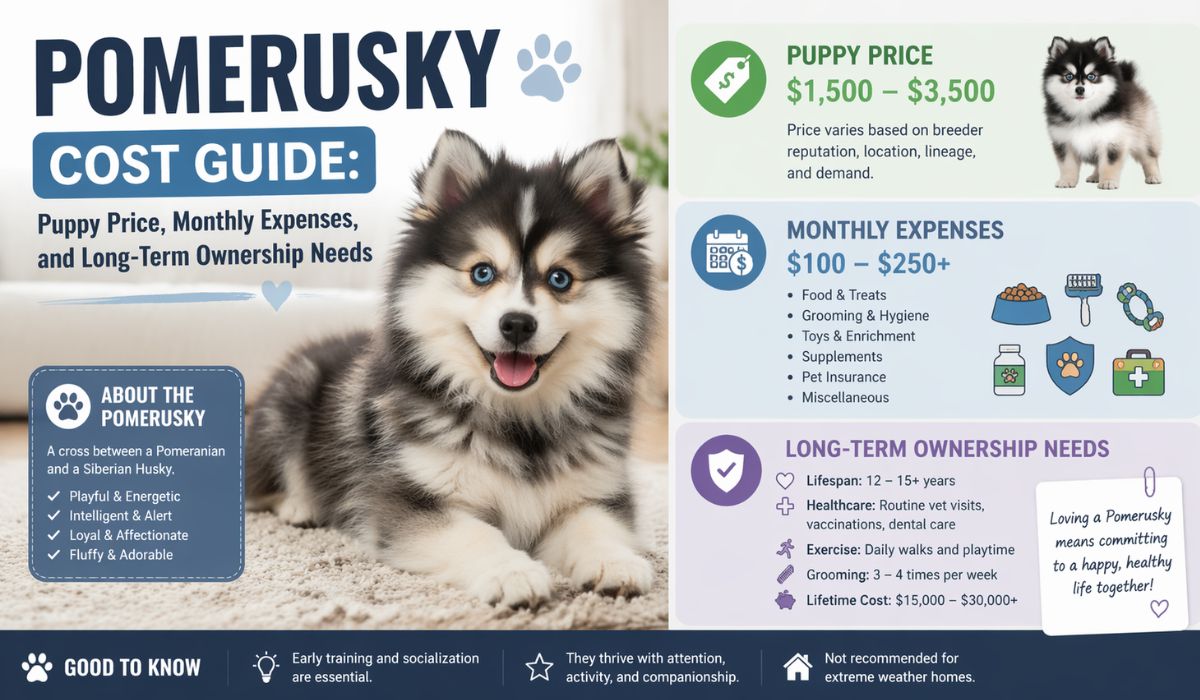
The first major expense is the cost of buying the puppy itself. In many cases, a Pomerusky costs more than a common mixed-breed dog because of demand, appearance, coat color, eye color, and breeder reputation. Puppies from well-known breeders with health-tested parent dogs usually cost more than those sold through less careful sources. That higher price may seem difficult at first, but it can sometimes reduce future stress by lowering the risk of poor breeding practices, weak early care, or missing records.
The purchase price is only one part of the starting bill. New owners often focus on the puppy’s listed price and forget the setup costs that appear in the first few weeks. A crate, bed, food bowls, collar, leash, brush, toys, cleaning supplies, first vet visit, and early vaccinations can add a meaningful amount. If you include microchipping, spaying or neutering, and basic training tools, your starting budget rises quickly. For that reason, it is smart to think of the first phase as an “entry cost” rather than just a puppy fee.
What Makes the Price Go Up or Down
Several things affect how much you might pay for this designer dog. Location matters because prices often rise in areas where demand is strong and breeder options are limited. Age can also make a difference, since very young puppies often cost more than older pups or young adults. Physical features may influence the price as well, especially if the dog has markings or eye colors that buyers strongly want.
Breeder quality is one of the biggest factors. A careful breeder may charge more because they invest in health checks, safe breeding plans, socialization, clean living conditions, and support for buyers after the sale. By contrast, a lower upfront price may sometimes come with hidden costs later. Puppies raised without proper care may need more medical attention, behavior work, or adjustment time. Saving money at the beginning does not always mean spending less over the life of the dog.
Monthly Food and Basic Care Costs
After the early setup stage, food becomes one of the most regular expenses. The monthly amount depends on the dog’s size, age, activity level, and the quality of food you choose. Some owners use standard dry food, while others prefer premium formulas, fresh food plans, or sensitive-stomach diets. Treats also add to the bill, especially if you use them often during training. Even small snack costs can build over time when they become part of a daily routine.
Basic care also includes items many people underestimate. Waste bags, grooming wipes, shampoo, dental chews, replacement toys, and seasonal supplies may not seem expensive one by one, but together they form part of the monthly budget. If the dog is very active or destructive, toys and chew items may need to be replaced more often. Owners who want to keep costs stable usually do best when they track these small recurring purchases instead of treating them as random extras.
ALSO READ THIS :- Ordenari Ingredients Guide: Niacinamide, Hyaluronic Acid, Retinol, and More
Grooming and Coat Maintenance
A Pomerusky often has a thick double coat, and that means grooming should never be treated as an afterthought. Brushing at home helps reduce tangles, loose hair, and coat buildup, but it still requires time and the right tools. A slicker brush, undercoat tool, nail clipper, and dog-safe shampoo may be enough for some owners. For others, regular visits to a groomer become part of the routine, especially during shedding seasons or when the coat gets harder to manage.
Professional grooming costs vary based on size, coat condition, and local pricing. Some owners book only occasional appointments for baths and nail trims, while others schedule full grooming sessions throughout the year. If the dog sheds heavily, your home may also need more cleaning support, whether that means lint rollers, a better vacuum, or more laundry care. Coat maintenance is not just about appearance. It affects comfort, hygiene, and overall household management too.
Veterinary Bills and Preventive Health Spending
Routine vet care is a major part of long-term ownership. Annual checkups, vaccinations, parasite prevention, and dental care all deserve a place in your budget. Even when a dog looks healthy, regular visits help catch small issues early. Preventive spending often feels easier to manage than large surprise bills, which is why many experienced owners build these costs into their yearly plan from the start.
Health costs can rise if the dog develops skin issues, allergies, digestive trouble, joint strain, or dental problems. Mixed dogs may sometimes benefit from broader genetic diversity, but that does not mean they are free from health concerns. Emergency visits can also happen without warning, whether from swallowing an object, hurting a paw, or reacting to food or heat. A realistic owner budget should leave room for both routine care and the kind of sudden problem that can happen to almost any pet.
Training, Social Skills, and Daily Structure
Training is another area where spending can vary widely. Some owners handle basic commands, house training, and leash work at home with patience and consistency. Others choose puppy classes or private trainers, especially if the dog shows stubborn behavior, high energy, barking habits, or separation issues. Since this cross can inherit alertness, intelligence, and a strong personality, training often works best when it starts early and stays consistent.
Social development matters just as much as obedience. Exposure to people, sounds, places, and other animals can help shape a calmer adult dog. That may mean spending money on classes, safe social outings, daycare trials, or supervised play sessions. These choices are not always required, but they can make daily life easier and improve the dog’s confidence. In many homes, money spent on early training saves frustration later.
Extra Costs That Many Owners Forget
A lot of owners prepare for food and vet care but forget the lifestyle costs that come with everyday living. These may not appear every month, yet they can make a big difference across the year. This is often where the true cost of ownership becomes clearer, because the dog affects travel plans, time use, and household routines in ways people do not always expect.
- Pet sitting or boarding during trips
- Dog walking help during busy work weeks
- Replacement leashes, harnesses, and beds
- Apartment pet fees or housing deposits
- Damage to shoes, furniture, rugs, or cords
- Seasonal gear for heat, rain, or cold walks
- Car seat covers, carriers, or travel crates
- Extra cleaning supplies for fur and accidents
Long-Term Financial Planning
Looking at the full ownership timeline is one of the smartest ways to judge affordability. A Pomerusky is not a short-term purchase. It is a long relationship that may include many years of feeding, grooming, training, preventive care, and occasional emergency treatment. When costs are spread across the dog’s life, the total becomes much larger than the puppy price that first caught your attention. That is why long-term thinking matters more than short-term excitement.
A simple pet budget can make a big difference. Some owners set aside a monthly amount for routine care and a separate emergency fund for unexpected vet bills. Others use pet insurance to help manage risk, though the value depends on the plan, the dog’s health, and what is covered. What matters most is consistency. Even small monthly savings can give you more control when an urgent situation happens.
ALSO READ THIS :- What Is a Priority Infrastructure Plan? Land Use, Trunk Infrastructure, and Funding Explained
Is This Dog Affordable for the Average Home?
The answer depends less on income alone and more on planning, stability, and lifestyle. For some homes, this hybrid is affordable because owners already have time for grooming, training, and active daily care. For others, the dog may become expensive because of professional services, repeated toy replacement, or housing limits. A lower purchase price does not always mean lower ownership cost, and a higher puppy fee does not guarantee financial difficulty if the rest of the budget is strong.
It is also important to think about energy and attention, not just money. Dogs with lively personalities often need regular engagement, and that can lead to extra spending if the owner is away often or cannot meet daily exercise needs alone. In that way, affordability includes both financial readiness and practical readiness. The best home is not simply the one that can buy the puppy. It is the one that can support the dog well for years.
Final Thoughts
A Pomerusky can be a joyful companion, but responsible ownership starts with honest budgeting. The first payment is only the beginning. Food, grooming, veterinary care, training, travel support, and emergency planning all shape the real cost over time. When people understand that early, they are more likely to make a calm and confident decision.
The good news is that thoughtful planning makes ownership much smoother. When you prepare for both routine and surprise expenses, you protect your budget and improve the dog’s quality of life at the same time. If you are drawn to this fluffy and energetic mix, take time to look at the full picture. A well-prepared owner usually has a better experience than someone who focuses only on the puppy price.
FAQs
1. How much does a Pomerusky puppy usually cost?
The price can vary a lot based on breeder reputation, location, age, and appearance. In many cases, this type of puppy costs more than an average mixed-breed dog because demand is higher. It is best to budget for both the purchase price and the first-round setup expenses.
2. Are monthly expenses for this dog high?
They can be moderate or fairly high depending on food choice, grooming needs, and health care. Owners who use professional groomers, premium diets, or regular daycare will spend more each month. Even with a simple routine, food, treats, parasite prevention, and supplies still add up.
3. Does a Pomerusky need professional grooming?
Not always, but many owners find it helpful. Thick coats often need regular brushing, and some dogs benefit from professional baths, nail trims, or seasonal coat care. If you handle grooming at home, you still need proper tools and a steady routine.
4. Should I get pet insurance for a Pomerusky?
Pet insurance can be useful if you want help managing large unexpected vet bills. It may not cover every issue, but it can reduce financial pressure during accidents or illness. Some owners prefer insurance, while others build a dedicated emergency savings fund instead.
5. Is this dog expensive over the long term?
Yes, it can be, especially when you add up many years of food, vet visits, grooming, training, and surprise expenses. The long-term cost is usually much higher than the original puppy price. That is why planning ahead matters so much.
6. What is the most overlooked cost of owning this hybrid?
Many people forget about travel care, apartment fees, damaged items, and emergency vet visits. These expenses may not happen every month, but they can hit the budget hard when they do. Small repeat purchases also get overlooked more often than they should.
FOR MORE CONTENT: CLOCKMAGAZINE