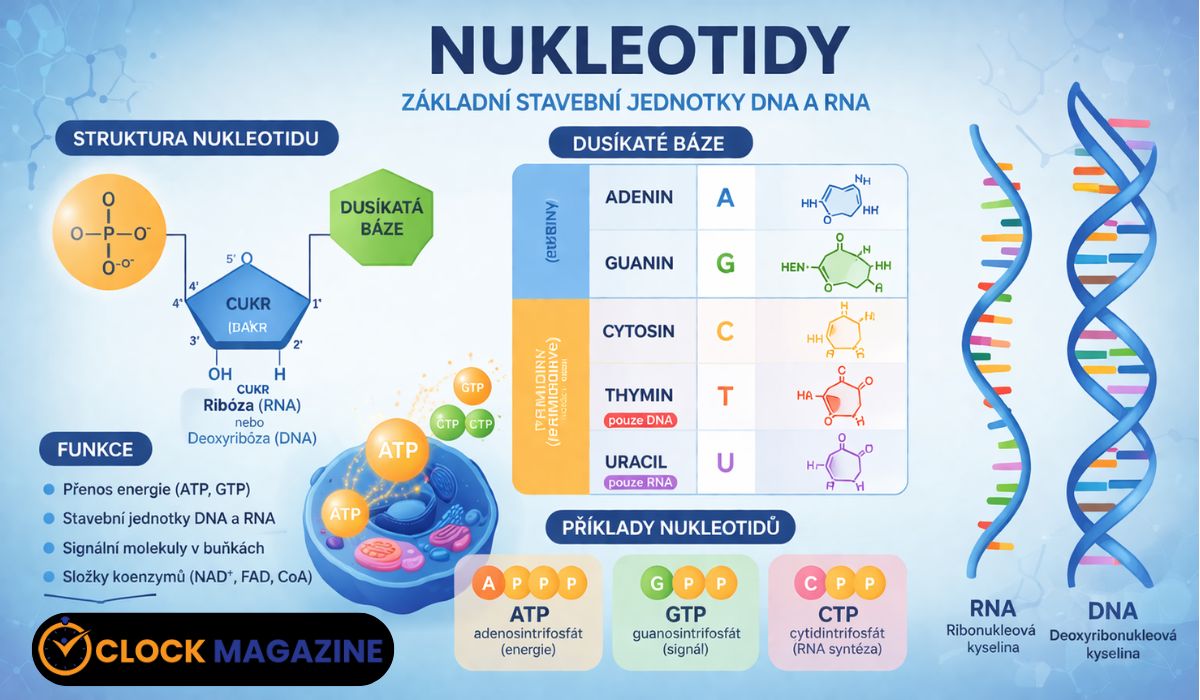
Nukleotidy are the small chemical units that build DNA and RNA, which means they sit at the center of how cells store information, copy it, and use it. In simple terms, if DNA and RNA are the body’s genetic texts, nukleotidy are the letters that make those texts possible. They do much more than help form genes. They also support energy transfer, signaling, and many everyday cell functions.
Many readers come across the word “Nukleotidy” in biology class, medical reading, or translated science material and want a plain-English explanation. The idea can sound technical at first, but it becomes much easier once you understand the three parts of a nucleotide, how DNA and RNA are built from them, and why living cells depend on them every second. This guide breaks that down in a clear and practical way.
What Nukleotidy Actually Are
A nucleotide is a basic building block of nucleic acids. Each one is made of three main parts: a sugar, a phosphate group, and a nitrogen-containing base. In DNA, the sugar is deoxyribose. In RNA, the sugar is ribose. That small sugar difference matters because it helps give DNA and RNA their own structure and jobs inside the cell.
The base is the part that carries the code-like information. In DNA, the bases are adenine, thymine, cytosine, and guanine. In RNA, uracil takes the place of thymine. When many of these units join together in a chain, they form the long molecules that store genetic instructions and help direct protein production.
The Three Parts That Make Them Important
The phosphate group helps connect one nucleotide to the next, creating a stable backbone for the strand. The sugar also helps form that backbone, while the base sticks outward and takes part in pairing. This arrangement is important because it gives nucleic acids both strength and flexibility. The backbone protects the structure, and the bases allow information to be read and copied.
The base is also where much of the real biological meaning sits. Bases pair in a specific way, which lets cells copy DNA with great accuracy. Adenine pairs with thymine in DNA, while cytosine pairs with guanine. In RNA, adenine pairs with uracil instead. These pairings are one reason heredity works so reliably from one cell generation to the next.
ALSO READ THIS :- Rosemary Margaret Hobor: The Woman Behind Comedy Legend John Candy
How They Build DNA
DNA is made of two long chains of nucleotides twisted around each other in the well-known double-helix shape. The sugar and phosphate parts form the outer sides of the structure, while the bases point inward and pair across the middle like the rungs of a ladder. This design is not just elegant. It is functional, because it helps DNA stay stable while still allowing the information to be copied when cells divide.
Each sequence of bases along DNA acts like coded biological information. A change in the order can change the message, much like changing letters in a word can change its meaning. Cells use this stored information to guide growth, repair, development, and daily function. Without nucleotides arranged in precise sequences, there would be no dependable way to pass instructions from one cell to another.
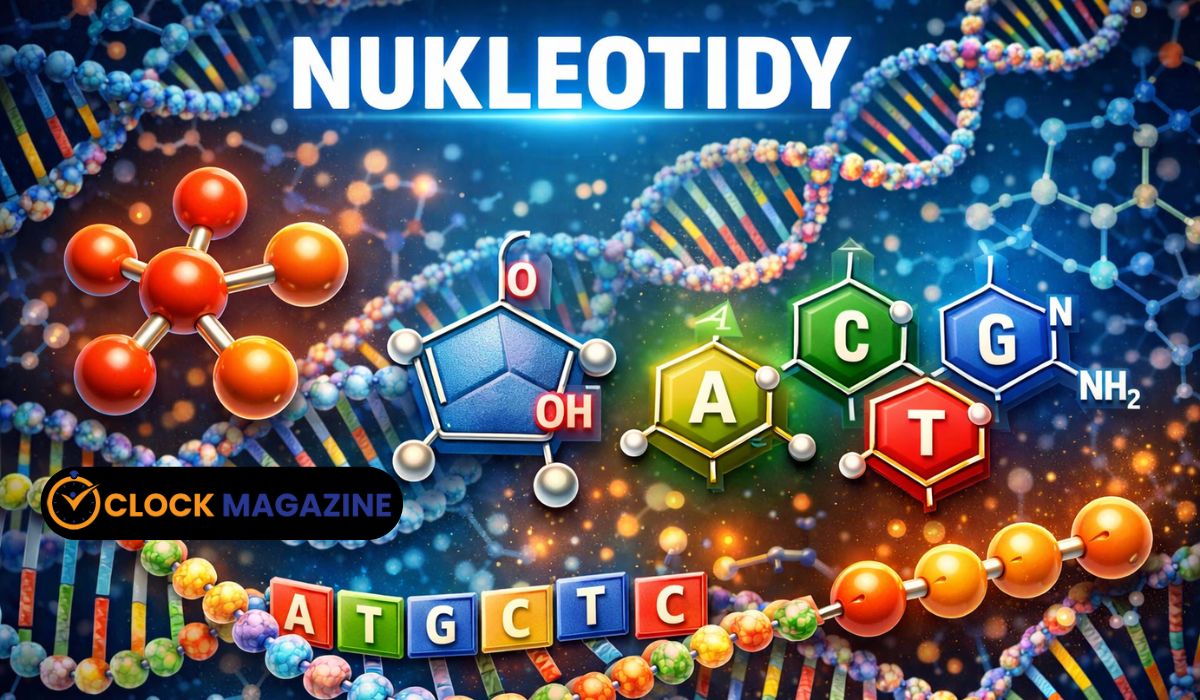
How They Build RNA
RNA is also made from nucleotides, but it is usually single-stranded rather than double-stranded. It uses ribose instead of deoxyribose and uracil instead of thymine. These differences give RNA a more flexible role in the cell. Instead of serving mainly as a long-term information archive, RNA often acts more like a working copy, a messenger, or a helper during protein production.
Messenger RNA carries instructions from DNA to ribosomes, where proteins are built. Transfer RNA helps bring the right amino acids into place. Ribosomal RNA forms a key part of the ribosome itself. These jobs show that nucleotides are not only about storing genetic information. They also help put that information into action, which is essential for life at the cellular level.
Why Cells Need Them Every Day
Cells need nucleotides constantly because cells are always doing work. They are copying DNA before division, making RNA for protein production, repairing damaged genetic material, and managing energy. Some nucleotides have roles beyond DNA and RNA. A well-known example is ATP, a nucleotide that serves as a major energy carrier in cells. This shows that these molecules are not just structural pieces. They also help power life’s daily processes.
They are also involved in signaling and control. Cells must respond to stress, nutrients, damage, and outside messages. Certain nucleotide-related molecules help pass signals that guide these responses. In other words, they help cells know when to grow, when to pause, when to repair, and when to activate specific pathways. That makes them central not only to genetics, but to cell behavior as a whole.
Main Highlights of Nukleotidy in Living Systems
When people first learn about this topic, it helps to see the major roles in one place. The core highlights include:
- building DNA, which stores long-term genetic information
- building RNA, which helps read and use that information
- supporting accurate copying of hereditary material
- helping cells make proteins needed for structure and function
- contributing to energy transfer through molecules such as ATP
- taking part in signaling and regulation inside the cell
These points explain why nucleotides are discussed in genetics, biochemistry, medicine, and general biology so often. They are involved in both the storage of information and the action that follows from it.
ALSO READ THIS :- How Rich Is Theo Somolu? A Deep Dive Into His 2026 Net Worth and Assets
What Happens When Problems Involve These Molecules
Because nucleotides are tied so closely to genetic information, problems involving them can have major effects. If the sequence of bases changes, the stored message may change too. Sometimes that change is harmless. Sometimes it can affect how a protein is made or how well a cell functions. That is one reason biology and medicine pay such close attention to DNA and RNA structure.
Cells do have repair systems, and those systems are impressive. They can often detect mistakes, fix damage, and keep the genetic message accurate. Still, the fact that repair is needed at all shows how important these molecules are. Life depends on keeping nucleotide-based information stable enough to preserve function, yet flexible enough to allow growth, adaptation, and normal biological change over time.
Why This Topic Matters Outside the Classroom
Nukleotidy matter far beyond school science. They are part of the language used in genetics, disease research, lab testing, and modern medicine. When people hear about DNA analysis, RNA-based technology, inherited conditions, or cellular repair, they are hearing about systems built from nucleotides. Even if the term itself sounds unfamiliar, the idea behind it affects many areas of health and research.
This topic also matters because it helps people understand the logic of life at a small scale. Instead of seeing cells as mysterious, you begin to see them as organized systems that store information, read it, respond to it, and pass it on. Nukleotidy are part of that deep order. They help explain how something as tiny as a molecule can shape something as large as growth, inheritance, and survival.
Final Thoughts
Nukleotidy are simple in structure but huge in importance. They form DNA and RNA, support the transfer of genetic information, help cells make proteins, and even contribute to energy use and signaling. Once you understand that they are the basic units behind these essential systems, the whole topic becomes much easier to follow.
The clearest way to think about them is this: they are the small pieces that make life’s information system work. DNA stores the message, RNA helps carry and use it, and cells rely on both every moment. That is why nukleotidy remain one of the most important ideas in biology, whether you are a student, a curious reader, or someone trying to better understand how living cells operate.
FAQs
1. What does Nukleotidy mean in simple words?
Nukleotidy means nucleotides, which are the small chemical units that make up DNA and RNA. They help store and carry the information cells need to function.
2. Are nukleotides the same as DNA?
No, they are not the same thing. Nucleotides are the smaller building blocks, while DNA is a long molecule made from many of those blocks joined together.
3. Why are nucleotides important in cells?
They are important because they help cells store genetic information, make RNA, build proteins, and manage energy-related tasks. Without them, normal cell function would not be possible.
4. What is the difference between DNA and RNA nucleotides?
DNA nucleotides use deoxyribose sugar and the base thymine. RNA nucleotides use ribose sugar and replace thymine with uracil.
5. Do nucleotides only work in genetics?
No, they do more than support genetics. Some also help with energy transfer and signaling, which means they take part in many everyday cell activities.
6. Why do students learn about Nukleotidy so early in biology?
They learn about them early because this topic helps explain how heredity, cell function, and protein production work together. It gives a strong base for understanding the rest of biology.
FOR MORE CONTENT: CLOCKMAGAZINE