Building a company with little or no money is hard, but it is also one of the clearest ways to test whether a business idea has real value. A startup booted fundraising strategy is about growing with care, using what you already have, and making smart money choices before chasing outside capital. Instead of starting with investor pitches, this approach starts with proof. It asks a simple question: can the business solve a real problem well enough that people will pay for it?
For many founders, this path creates better discipline from day one. It forces clear thinking about product value, customer needs, pricing, and costs. It also helps founders keep more control over decisions, ownership, and growth pace. A company that learns how to survive before it scales often builds stronger habits. That does not mean this path is easy or always right for every startup, but it does mean the business is built on real traction instead of hope alone.
Start With the Right Mindset
A strong fundraising plan begins with the right mindset long before any money enters the business. Founders often think funding is the first goal, but in reality, the first goal is learning. You need to learn who has the problem, how painful it is, and whether your solution matters enough for someone to switch, buy, or sign up. If you skip this step, you may raise or spend money on a business that never had a clear market in the first place.
This is why early restraint matters. A revenue-first startup should not act like a well-funded company. It should stay focused, avoid waste, and build only what supports customer value. Fancy branding, large teams, and complex systems can wait. At the beginning, speed, clarity, and useful feedback matter more than appearing big. When money is limited, every move should answer one of three questions: does this help us learn, help us sell, or help us serve customers better?
Define the Problem Before the Product
Many weak startups fail because they build a product around an idea they love instead of a problem people truly want solved. A better approach is to define one narrow problem in simple language. If your target customer cannot quickly understand what you do and why it helps, the offer is not ready yet. A startup booted fundraising strategy works best when the business begins with a clear pain point and a small, useful solution.
This focus helps reduce cost and confusion. You do not need ten features to start. You need one strong reason for someone to care. A founder who understands the customer’s daily frustration can shape an offer that is easier to explain, easier to test, and easier to improve. That early clarity also makes future fundraising easier because traction becomes easier to measure and communicate.
Build a Lean Offer That Solves One Job Well
A lean offer is not the same as a weak offer. It is simply a tighter one. At the early stage, your goal is not to build everything. Your goal is to solve one job well enough that the first users feel real value. This could be a simple software tool, a productized service, a paid community, a niche platform, or even a manual process behind the scenes. What matters is the result, not how polished it looks on day one.
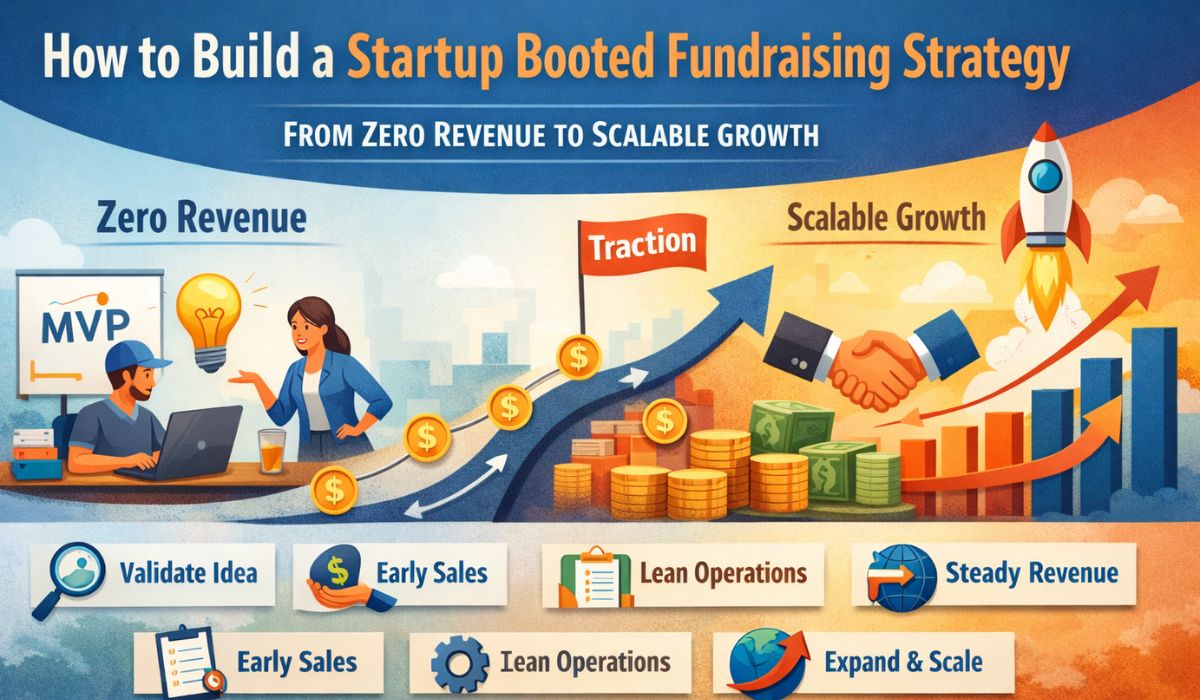
Founders often waste time building for scale before earning trust. A lean model flips that order. First, prove people want the outcome. Then improve the delivery. Then make it more efficient. Then scale what works. This step-by-step pattern protects cash and reduces risk. It also gives you a practical way to move from zero revenue toward steady income without heavy early spending.
ALSO READ THIS :- Rolerek Explained Clearly: Important Information for Readers
Validate Demand Before You Spend Deeply
Validation means checking whether real people will take real action. Many founders confuse positive feedback with actual demand. People may say your idea sounds great, but that does not mean they will buy. Demand becomes real when someone joins a waitlist, books a call, pays a deposit, signs a pilot, or becomes a customer. These actions matter more than praise.
Before you spend deeply on development, marketing, or hiring, test the market in low-cost ways. Use direct outreach, landing pages, early demos, simple offers, and short sales calls. Talk to potential customers and listen closely to the words they use. Their language often reveals what they value most. It also helps you shape better messaging, better pricing, and a more useful product. Good validation lowers the chance of building something nobody needs.
Create an Early Revenue Path
One of the smartest parts of this approach is building a path to early revenue, even if it is small at first. A startup does not need large sales to prove value. It needs enough paying demand to show movement. That first income can come from pre-sales, consulting tied to the product idea, setup fees, pilot programs, subscriptions, retainers, or small business contracts. The goal is not perfection. The goal is a real exchange of value.
Early revenue teaches lessons that outside money cannot teach. It shows whether the offer is clear, whether the pricing makes sense, and whether the customer sees enough value to commit. Revenue also changes founder behavior. Once customers pay, priorities become sharper. You stop guessing as much. You focus on delivery, retention, and repeatable results. That is where a more solid growth model begins.
Keep Costs Low Without Slowing Learning
Keeping costs low does not mean refusing to spend. It means spending on the right things at the right time. Early money should support learning and customer movement, not founder comfort. This might mean using simple tools, contracting instead of hiring full-time, delaying office costs, and avoiding expensive campaigns before the message is proven. Frugality becomes powerful when it protects focus rather than creating fear.
A healthy cost structure also gives you more time. Time is often the most valuable resource for an early startup. The lower your burn, the longer you can test, improve, and sell. This gives the business room to breathe. It also makes future fundraising stronger because investors and partners often respect a company that knows how to do more with less. Efficient growth sends a strong signal about founder judgment.
Build a Simple Financial System Early
Many early founders avoid finance because it feels boring, stressful, or too advanced. That is a mistake. A startup booted fundraising strategy depends on knowing where cash comes from, where it goes, and how long it can last. You do not need a complex finance team to start. You need a simple system that tracks income, monthly expenses, profit margins, customer acquisition costs, and cash runway.
This kind of visibility helps you make better decisions faster. You can see which channel is working, which product line is weak, and when cash pressure is rising. You can also plan more calmly. Instead of reacting late, you can adjust early. Founders who understand their numbers often raise money on better terms later because they know their business clearly and can explain it with confidence.
Use Traction to Earn Leverage
Traction is what gives a founder leverage. It can mean early sales, user growth, renewals, referrals, pilot success, high retention, strong engagement, or positive margins. It does not always need to be huge. It needs to be real and connected to business value. A company with proof has more options than a company with only a pitch deck.
When traction grows, the fundraising conversation changes. Instead of asking investors to believe in an untested story, you can show evidence. Instead of raising from weakness, you can raise from progress. This improves your position in every discussion about valuation, ownership, growth plans, and investor fit. Even if you choose not to raise, traction gives you strategic freedom. You can keep growing on your own terms or use capital only where it clearly helps.
Know When Outside Capital Makes Sense
Booted growth does not mean refusing all outside money forever. It means being thoughtful about when, why, and how you take it. For some businesses, outside capital is useful once the model works and the need becomes clear. Maybe demand is rising faster than the team can handle. Maybe product development needs speed. Maybe market timing matters. Maybe expansion requires working capital. In these cases, funding can be a tool, not a rescue plan.
The key is to raise for acceleration, not survival, whenever possible. If capital only covers confusion, weak demand, or poor unit economics, it often delays harder problems. But if capital helps scale a working model, it can create real advantage. Founders should know the trade-offs before taking funds. Equity dilution, board pressure, growth expectations, and reporting demands all shape the future of the business. Smart fundraising begins with clear intent.
What Strong Founders Prioritize Early
The most effective founders tend to focus on a small group of actions that directly improve the business. These priorities shape stronger companies and reduce wasted motion:
- clear customer problem
- simple offer and pricing
- fast feedback loops
- early sales conversations
- lean operations
- careful cash management
- customer retention
- repeatable acquisition channels
- useful product improvements
- founder discipline and patience
These points may look basic, but they are often what separate durable startups from noisy ones. A founder does not need to master everything at once. They need to stay close to reality, stay close to the customer, and make steady progress on the few things that matter most. Consistency in these areas builds a stronger base for growth than hype ever can.
Prepare for Scale Before You Chase It
Scalable growth sounds exciting, but not every business is ready for it when the founder wants it. Growth without systems can create churn, stress, and cash problems. Before pushing hard, make sure delivery works, support is manageable, and the product keeps creating value after the first sale. A company that grows too early may expand its weaknesses instead of its strengths.
Preparing for scale means tightening the basics. Document repeatable processes. Understand your best customer type. Improve onboarding. Track retention. Make your pricing easier to explain. Improve operations so the business does not depend on founder heroics every day. Scalable growth is not just about getting more customers. It is about serving more customers well without breaking the business in the process.
ALSO READ THIS :- Neatlanta and Modern Atlanta: Culture, Community, and Urban Lifestyle Explained
Common Mistakes That Slow Growth
A common mistake is trying to look bigger than the business really is. Founders may spend too much on brand image, software, staff, or advertising before the core offer is working. Another mistake is building too many features instead of solving one painful need well. Some also avoid selling because they are more comfortable building. That creates a dangerous gap between product effort and customer reality.
Another major problem is raising money too early without understanding the business. When founders do not yet know their numbers, ideal customer, or sales process, they can end up with pressure but no clarity. That pressure can push them into bad decisions. Strong growth usually comes from steady learning, honest signals, and disciplined action. Founders who stay grounded tend to move farther over time.
Build a Fundraising Story From Real Progress
If you later decide to raise, your best story will come from what the business has already done, not what it hopes to do someday. Investors, lenders, and strategic partners all respond better to proof than dreams. This means your story should be built around customer demand, market insight, traction, operating discipline, and a clear plan for where new capital will go. The more specific you are, the stronger your position becomes.
That story should also explain why the business is ready now. What changed? What has been proven? What bottleneck is holding growth back? How will funding create measurable progress? When a founder can answer these questions clearly, fundraising becomes less about selling a fantasy and more about expanding a business that already has momentum. That is one of the biggest strengths of a revenue-first path.
Final Thoughts
A startup booted fundraising strategy is not just a money plan. It is a company-building approach based on focus, customer truth, and disciplined growth. It teaches founders to earn momentum instead of borrowing confidence. By starting lean, validating demand, creating early revenue, and using traction as leverage, a startup can move from zero revenue toward scalable growth with more control and stronger foundations.
This path is not the fastest in every case, and it is not right for every market. But it is one of the clearest ways to build a real business. Founders who take this route often gain something more valuable than early funding: they gain judgment. And in the long run, good judgment is one of the strongest assets any startup can have.
FAQs
1. What is a startup booted fundraising strategy?
It is a founder-led growth approach that starts with personal resources, lean operations, and early customer revenue before relying heavily on investors. The goal is to prove the business works first and raise capital later only if it supports clear growth.
2. Can a startup grow without investors?
Yes, many startups can grow through pre-sales, service income, subscriptions, small contracts, and reinvested revenue. Growth may be slower at first, but it can also be healthier because the company learns discipline and keeps more control.
3. When should a bootstrapped startup raise money?
A startup should usually consider raising money when it has clear demand, useful traction, and a real reason why capital will speed up a working model. Raising too early can add pressure before the business is ready.
4. What are the biggest benefits of this approach?
The main benefits are stronger founder control, better spending discipline, clearer customer focus, and less pressure to chase growth before the business is ready. It can also lead to better fundraising terms later if the company proves real traction.
5. What is the main risk of growing this way?
The biggest risk is moving too slowly or running out of cash before the business finds traction. That is why cost control, validation, and early revenue matter so much in this model.
6. How do founders move from zero revenue to scalable growth?
They usually start by solving one clear problem, testing demand, getting early paying customers, improving the offer, and building repeatable sales and delivery systems. Once the model is working, they can scale with reinvested revenue or carefully chosen outside capital.
FOR MORE CONTENT: CLOCKMAGAZINE