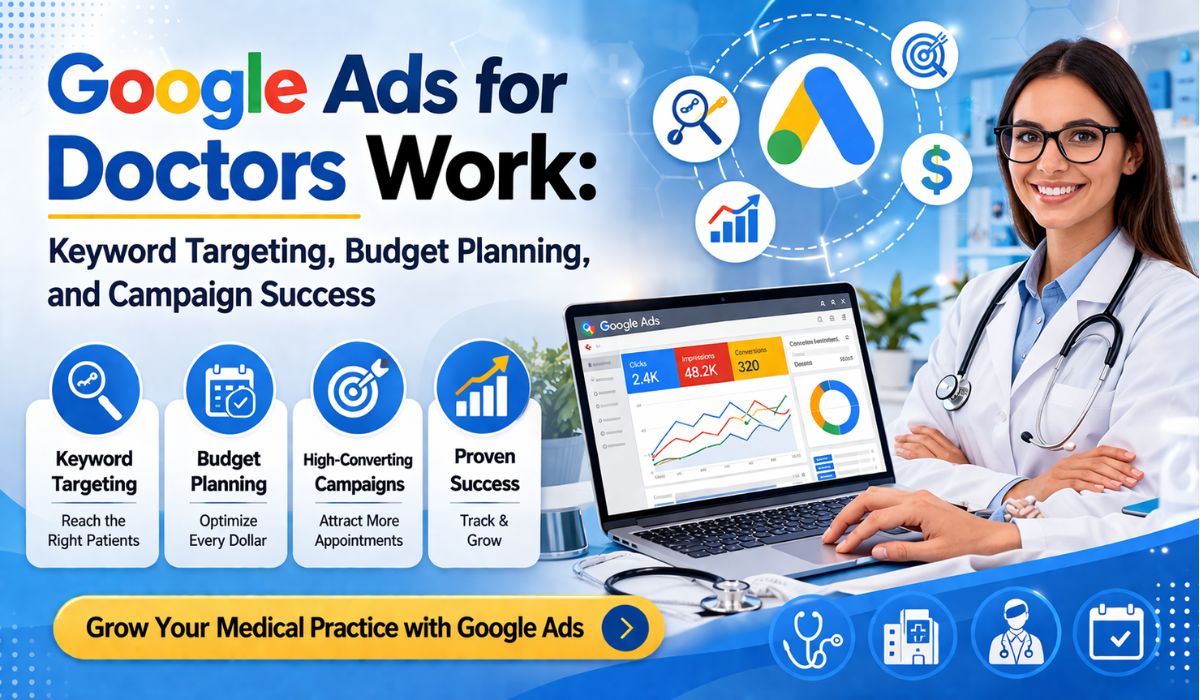
Healthcare marketing has changed a lot in recent years. Many patients now begin their search for care online, whether they need a family doctor, a dentist, a skin clinic, or a specialist close to home. They often want fast answers, clear choices, and a simple way to book an appointment. That is why paid search has become such a useful tool for medical practices that want to reach people at the right moment.
Google Ads for Doctors Work when campaigns are planned with care, matched to patient needs, and built around trust. A doctor’s office is not selling a basic product. It is offering care, safety, and a service that affects real lives. Because of that, every part of a campaign matters, from ad wording to location settings to the landing page people see after they click. When these parts work together, clinics can attract better leads, reduce wasted spend, and turn online interest into booked visits.
Why Paid Search Matters for Medical Practices
Doctors face a unique challenge in digital marketing. People do not usually browse for medical services just for fun. They search because they have a need, a concern, or a question they want solved quickly. That makes paid search especially powerful in healthcare, because it places a clinic in front of people who are already looking for help. This is different from broad awareness campaigns that simply try to get attention without strong intent.
A well-run campaign can help a practice appear for local searches, urgent care needs, treatment-specific questions, and service-based requests. For example, a person might look for a pediatrician nearby, an orthopedic doctor for knee pain, or a same-day dental visit. These are strong signs of intent. When a practice shows up with a clear message, easy contact options, and a useful page, the chance of a call or booking becomes much higher.
Understanding Patient Intent Before Building Campaigns
Before writing ads or setting a budget, doctors need to understand why people search and what stage they are in. Some people are ready to book right away. Others are comparing clinics, reading about symptoms, or checking insurance and office hours. A successful campaign speaks differently to each group. This is where many medical advertisers either win or lose.
Patient intent is often shaped by urgency, trust, distance, and specialization. A person searching for “emergency dentist near me” is very different from someone searching for “best way to whiten teeth.” One wants immediate care. The other may still be exploring options. Campaigns work best when each ad group, landing page, and message fits the reason behind the search. This creates better relevance and helps the practice attract patients who are more likely to act.
ALSO READ THIS :- What Is Cumhuritey? A Clear Guide to Its Meaning and Modern Relevance
Choosing the Right Search Terms for Better Reach
One of the most important parts of campaign planning is choosing the right search terms. Doctors should focus on the words real patients use, not only the technical terms used inside the medical field. A clinic may say “dermatology treatment,” while a patient may search for “skin rash doctor” or “acne specialist near me.” Bridging that gap is a big part of campaign success.
Strong targeting often includes service-based terms, condition-based terms, treatment names, and local intent. It also helps to group searches by service line, such as cosmetic care, family care, urgent care, or specialty care. This makes ad writing more focused and improves the user experience after the click. Clear grouping also makes reporting easier, so the practice can see what is truly bringing in value.
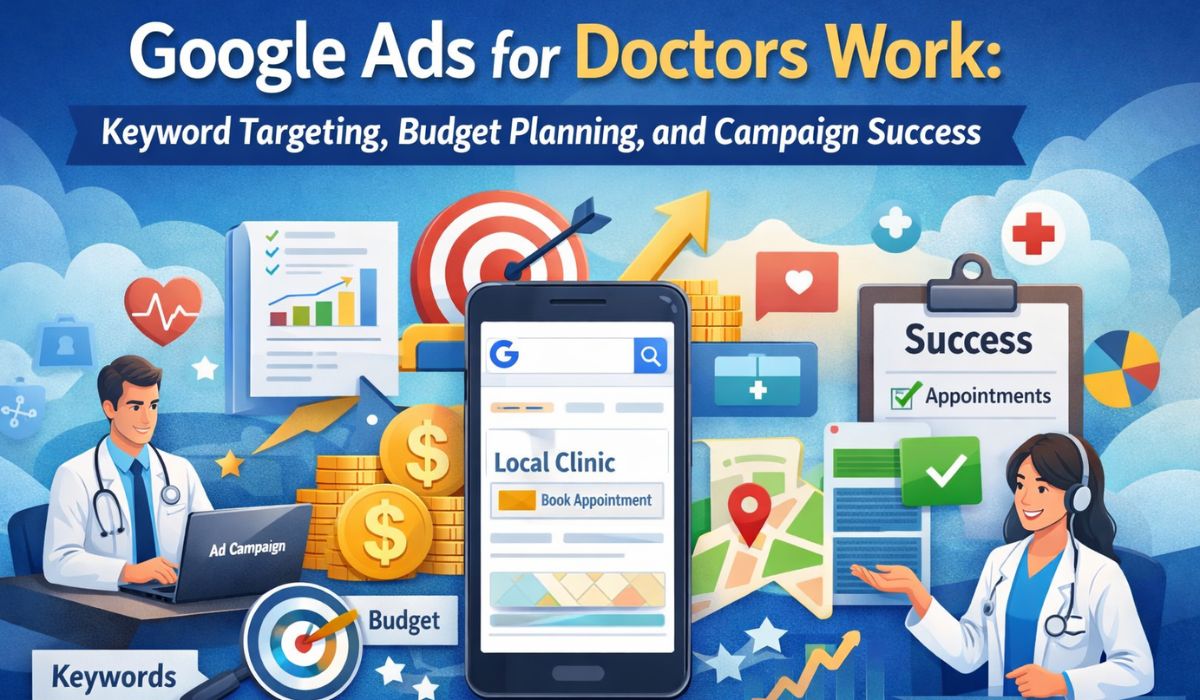
Local Targeting Helps Doctors Reach the Right Patients
Most medical practices serve a defined area. Even large hospitals and specialty clinics tend to draw patients from certain regions more than others. That is why location targeting is essential. Running ads too broadly often wastes money on clicks from people who are too far away, outside the service area, or unable to visit the clinic at all.
A local strategy should reflect how patients actually search. Many users include city names, neighborhood terms, or simple phrases like “near me.” Ads should match this behavior and highlight what matters most to local patients, such as same-day care, office location, parking, insurance acceptance, or evening hours. When a clinic feels nearby and accessible, it becomes easier for a patient to trust it and take the next step.
Budget Planning Should Match Practice Goals
Budget planning should never begin with a random number. It should begin with a goal. Some practices want more phone calls. Others want new patient forms, consultation requests, or high-value treatment bookings. The budget should reflect the value of a new patient, the level of competition in the area, and how fast the clinic wants to grow. A small office can still succeed with a modest budget if the campaign is focused and the traffic is high quality.
Doctors also need to plan for testing. Paid search rarely performs at its best on day one. It takes time to compare ads, learn which services attract the best patients, and study where money is being spent wisely or wasted. A strong budget leaves room for that learning period. Instead of trying to cover every service at once, many practices do better by starting with one or two high-priority services and expanding after results become more stable.
What Strong Medical Campaigns Usually Include
The best medical campaigns are simple, focused, and built around the patient journey. They avoid vague promises and instead show clear value, strong trust signals, and easy next steps. In many cases, successful campaigns share these parts:
- Clear ad groups for each service or treatment area
- Strong local targeting based on real service zones
- Simple ad copy that explains the benefit of booking
- Landing pages that match the ad message closely
- Mobile-friendly forms and click-to-call options
- Easy access to office hours, location, and insurance details
- Tracking for calls, form fills, and appointment requests
- Regular review of poor-performing searches and wasted spend
These points may look basic, but they often make the biggest difference. A doctor does not need the most complex account structure to win. What matters more is relevance, clarity, and ongoing adjustment based on real patient behavior.
Writing Ads That Feel Clear and Trustworthy
Medical ads should sound calm, direct, and helpful. People looking for care may feel stressed, uncertain, or even scared. That means flashy language often performs worse than simple, reassuring language. Ads should quickly explain what the practice offers, who it serves, and why a patient should choose it. Mentioning same-day visits, experienced staff, advanced treatment, or convenient scheduling can help when those claims are true and easy to support on the landing page.
Trust also comes from consistency. If the ad promises quick appointments, the landing page should make booking simple. If the ad mentions a specialist, the page should clearly show the doctor’s background, services, and patient benefits. This reduces confusion and improves conversion rates. It also helps set the right expectations before a patient ever speaks with the front desk.
Landing Pages Turn Interest Into Action
A click alone does not create a new patient. The landing page carries the next and most important part of the journey. If the page is slow, confusing, or too broad, people may leave even after showing strong interest. That is why every major service should have a page that is specific, easy to scan, and clearly built for action.
Strong landing pages often include a short overview of the service, signs or symptoms the clinic treats, benefits of the visit, details about the doctor or team, and one main call to action. Contact forms should be short. Phone numbers should be easy to tap on mobile devices. Maps, hours, accepted insurance plans, and patient-friendly language all support better results. The goal is to remove doubt and make the next step feel easy.
Tracking Results the Right Way
Doctors should not judge a campaign by clicks alone. Clicks can show interest, but they do not always show quality. A better view comes from tracking calls, appointment requests, online forms, booked consultations, and sometimes even patient value over time. Without this data, it is difficult to know whether a campaign is truly helping the practice grow.
Tracking also helps reveal hidden problems. For example, one service may get many clicks but few bookings, while another may have fewer clicks but much stronger patient value. A campaign may seem busy on the surface while still wasting spend underneath. Accurate measurement helps practices improve ad spend decisions, change weak landing pages, and focus attention on services that create real business value.
Common Mistakes That Hurt Performance
Many campaigns struggle not because paid search does not work, but because the setup is too broad or not patient-focused enough. One common mistake is sending all traffic to the homepage. Another is mixing too many services into one ad group, which makes the message weak and generic. Some practices also fail to remove poor searches, which means they keep paying for clicks from people who are not a good fit.
Another problem is ignoring the patient experience after the click. Even a strong ad cannot save a weak website, a slow phone response, or a confusing booking process. Medical marketing works best when the whole system is aligned. The ad, the page, the staff response, and the booking path all shape the result. When one part breaks, conversion rates often drop fast.
ALSO READ THIS :- Why Is Hothaylost Trending? Everything You Need to Know
Different Types of Doctors Need Different Strategies
Not every doctor should run the same type of campaign. A family medicine office may focus on nearby patients looking for a primary care provider. A cosmetic clinic may target treatment interest and consultation leads. An orthopedic practice may need separate campaigns for joint pain, sports injuries, and surgical evaluation. The more closely the campaign reflects the real service model, the better the results tend to be.
Specialists often do best with a more focused structure. Instead of one broad campaign, they may need separate campaigns based on treatment, symptom type, or patient need. This gives them better control over messaging, budget, and performance review. It also helps each service line stand on its own, rather than competing for attention inside one general campaign.
How Campaign Success Grows Over Time
Campaign success is rarely instant. Most strong accounts improve over time through testing, review, and careful changes. This may include adjusting bids, rewriting ad copy, refining search targeting, improving landing pages, or shifting budget toward better-performing services. Practices that stay patient and look at real business results often see stronger long-term growth than those chasing quick wins.
It also helps to think beyond one appointment. A new patient may return for follow-up care, family care, annual visits, or additional treatment. That means the value of one successful lead can be much higher than it first appears. When clinics understand patient lifetime value, they make better decisions about what they can reasonably spend to acquire new patients through paid search.
Final Thoughts
Google Ads for Doctors Work best when they are built around real patient needs, strong local intent, clear messaging, and smart budget control. The goal is not just to drive traffic. It is to connect the right patients with the right care at the right time. When campaigns are specific, landing pages are useful, and the practice responds well, paid search can become a dependable source of growth.
For doctors, success comes from relevance, trust, and steady improvement. A clinic does not need to chase every possible search or spend the largest budget in the market. It needs to focus on the services it delivers well, the patients it wants to attract, and the experience it offers from click to appointment. That is what turns online advertising into real campaign success.
FAQs
1. How long does it take for a doctor’s campaign to show results?
Some campaigns can generate calls or form fills within days, but stronger results usually take a few weeks of review and adjustment. It often depends on competition, budget, service type, and how well the landing page supports bookings.
2. Is paid search a good option for small clinics?
Yes, small clinics can do very well when they focus on a tight service area and a few high-priority services. A smaller budget can still perform well if the campaign is specific and avoids wasted clicks.
3. What matters more, the ad or the landing page?
Both matter, but the landing page often decides whether a click becomes a lead. A strong ad gets attention, while a strong page builds trust and makes it easy for the patient to act.
4. Should every medical service have its own campaign?
Not always, but high-value or very different services usually perform better when separated. This makes the message more relevant and helps the practice control spend more clearly.
5. Why do some campaigns get clicks but few appointments?
This often happens when the ad attracts the wrong audience or the landing page does not match what people expected. Poor mobile design, slow response times, and weak booking paths can also hurt results.
6. Can doctors use the same strategy in every city or country?
No, local behavior, competition, and patient needs can vary a lot by area. Campaigns should reflect the real market, service demand, and patient expectations in the places the clinic serves.
FOR MORE CONTENT: CLOCKMAGAZINE