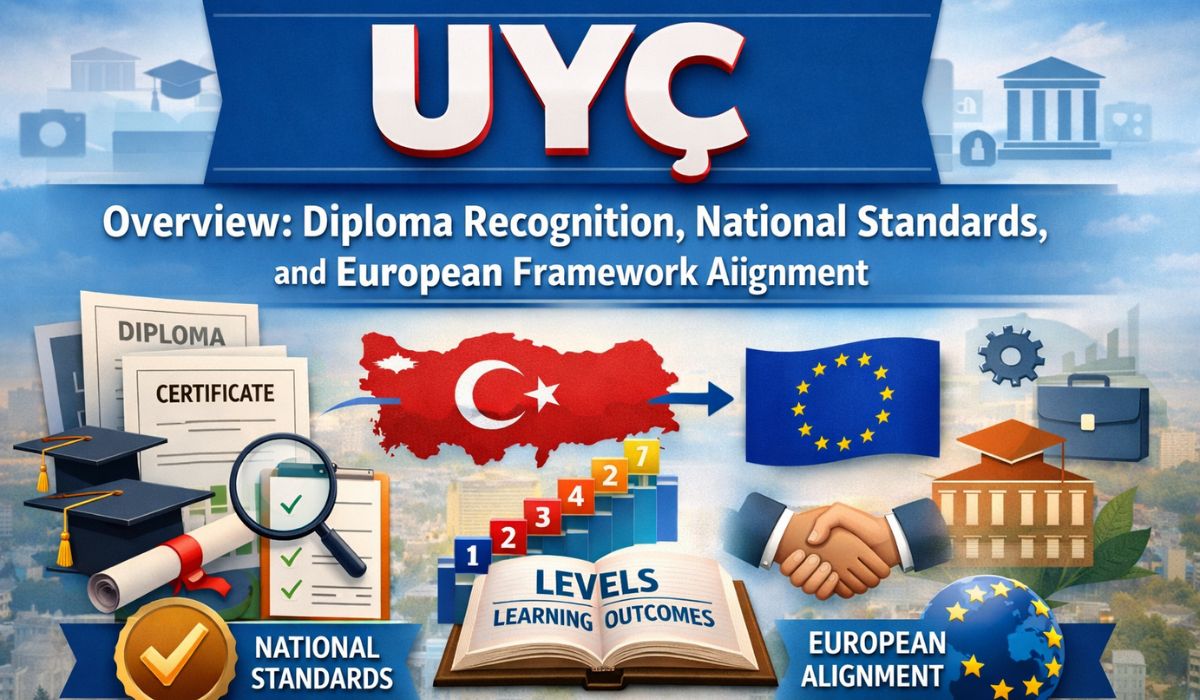
UYÇ is an important framework for understanding how qualifications are described, compared, and recognized in Turkey. For students, graduates, employers, and institutions, it offers a clearer way to see what a diploma, certificate, or professional award actually represents. Instead of focusing only on the name of a program or the time spent in class, it helps people look at what a learner knows, what they can do, and what level they have reached. That makes the system useful not just inside one school or one sector, but across education, training, and working life.
This matters even more today because people move between countries, change careers, and build skills in many different ways. A qualification system needs to be understandable at home and also readable across borders. UYÇ supports that goal by creating structure around levels, standards, and outcomes. It gives a common language for qualifications, which helps reduce confusion and improves trust. For a worldwide audience, the topic is valuable because it shows how one country connects national education goals with broader European alignment and recognition practices.
What UYÇ Means in Practical Terms
At its core, UYÇ is a national qualifications framework. In simple terms, that means it is a system used to define and organize qualifications according to agreed levels and standards. A diploma, certificate, or professional credential is easier to understand when it is placed within a framework that explains its level, its purpose, and the learning results behind it. This helps people compare qualifications more fairly. It also helps prevent the common problem of judging an award only by its title, which may not say much to someone outside the issuing institution or country.
In practical life, this framework supports communication between schools, universities, training providers, employers, and public bodies. A student wants to know what comes after a current qualification. An employer wants to know what a candidate is trained to do. A university may want to evaluate prior learning before accepting a student into a new program. UYÇ gives these groups a more consistent basis for making decisions. It does not remove every challenge, but it makes the system easier to read and far more transparent than a scattered collection of unrelated awards.
Why Levels and Learning Outcomes Matter
One of the most important ideas behind the framework is that qualifications should be understood through levels and learning outcomes. A level shows the complexity and depth of a qualification. Learning outcomes describe what a person is expected to know, understand, and perform after completing a program or training route. This is a major shift from older thinking that placed too much weight on program length alone. Time still matters, but it is no longer the only signal of value. What really matters is the actual capability a learner has gained.
This approach is especially useful in a world where learning happens in different settings. Some people follow formal education from school to university. Others build skills through vocational training, workplace practice, or later-life study. When qualifications are described in a structured way, it becomes easier to compare different routes without treating one path as automatically better than another. That is why UYÇ is not only an administrative tool. It also supports fairness, mobility, and a better understanding of how knowledge and skills are developed across different stages of life.
ALSO READ THIS :- Fisila Information Hub: Basic Facts Made Easy to Understand
UYÇ and Diploma Recognition
Diploma recognition is one of the reasons the topic gets so much attention. Recognition becomes important when a learner wants to continue study, apply for a job, or prove that an existing qualification meets expected standards. In these situations, people need more than a document with a title on it. They need a clear explanation of what that document represents. UYÇ helps by linking qualifications to defined levels and describing them in a more systematic way. That improves confidence for institutions and employers who need to assess them.
Recognition should also be understood carefully. A framework can improve transparency, but it is not the same as automatic acceptance everywhere. Different countries, professions, and institutions still have their own rules. Even so, national frameworks make the recognition process more understandable because they provide a reference point. When qualifications are easier to describe and compare, decision-making becomes more consistent. For international students and graduates, this is valuable because it supports smoother academic progression, clearer equivalency discussions, and better communication between national systems.
National Standards and Quality Confidence
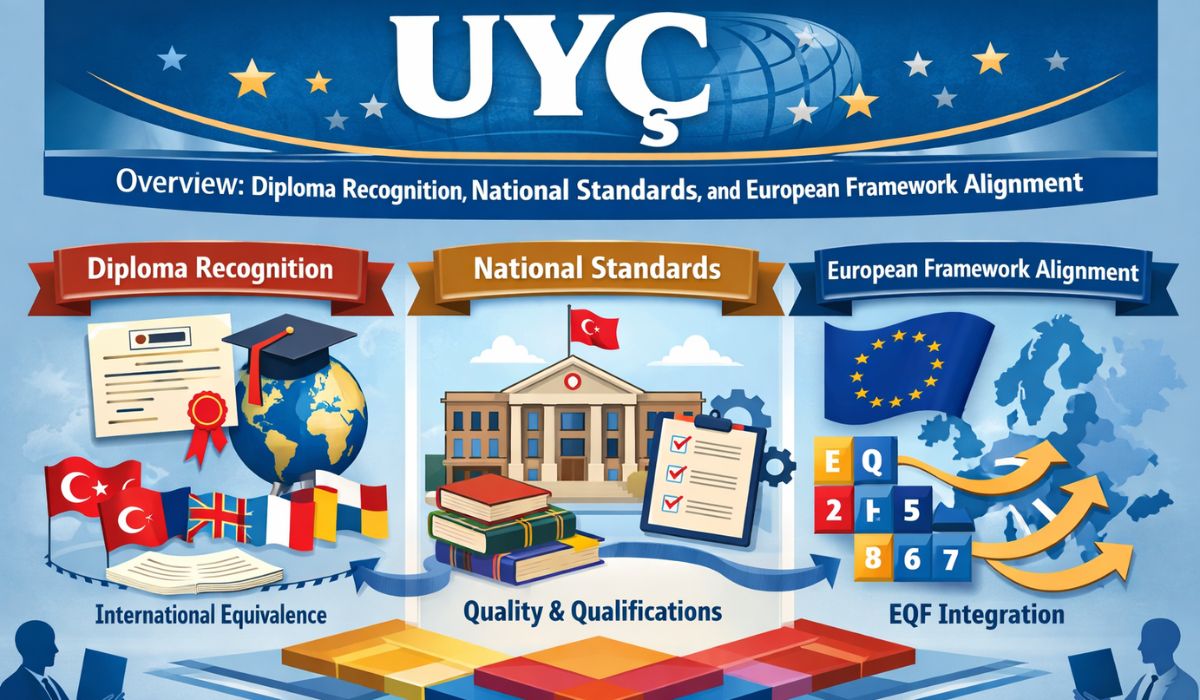
National standards are another major part of the picture. A qualifications framework is only useful if the qualifications inside it are supported by clear expectations and reliable quality processes. That is why standards matter so much. They help define what is expected from a program, what level of learning is required, and how achievement should be assessed. Without standards, two qualifications with similar names could mean very different things. With standards, there is a stronger basis for trust, comparison, and public confidence.
Quality confidence grows when awards are linked to real learning and not just paperwork. In this area, UYÇ supports a more orderly system by encouraging consistent descriptions, stronger institutional alignment, and clearer progression routes. This can benefit learners who want to move from one level to another, as well as employers who need a better sense of what a qualification stands for. It also helps policy discussions because governments and educational bodies can review qualifications more effectively when those qualifications are organized within a common structure.
How UYÇ Connects with the European Framework
For international readers, one of the most interesting parts of the subject is the connection with the European framework. European alignment matters because it creates a broader reference point beyond national borders. When national qualifications are described in a way that can be related to a European level structure, it becomes easier for institutions, employers, and learners in other countries to understand them. This does not mean every system becomes identical. It means they can be read in relation to one another with greater clarity and less guesswork.
That alignment can support student mobility, cross-border study, and a more open labor market. If a graduate from Turkey applies abroad, a better-aligned qualifications system can make discussions easier because the level and structure of the award are clearer. The same is true when students from abroad look at Turkish higher education and want to understand program standing. In this sense, UYÇ serves both national needs and international visibility. It helps Turkey describe its qualifications in a way that is more understandable in the wider European space while still keeping its own educational identity.
Who Benefits Most from UYÇ
Many groups benefit from this framework, but they do not all use it in the same way. Students use it to understand progression, level expectations, and what a qualification may lead to next. Universities and training providers use it to describe programs more clearly and connect awards to broader standards. Employers use it to interpret applicant backgrounds with greater confidence. Public authorities use it to support policy, coordination, and system-wide consistency. The value of the framework grows when all of these groups treat it as a shared point of reference rather than a purely technical document.
The most visible benefits can be summarized clearly:
- Students gain a clearer view of qualification levels and future study options.
- Graduates can explain their awards more easily in academic or work settings.
- Employers get a better basis for comparing applicant qualifications.
- Institutions can present programs in a more transparent and structured way.
- Policy bodies can support stronger coordination across education and training.
- International audiences can understand Turkish awards with less confusion.
ALSO READ THIS :- How CNLawBlog Helps Readers Understand Legal News, Case Studies, and Law Guides
Limits, Challenges, and Real-World Use
Even a strong framework has limits. Real-world recognition decisions still depend on context, regulation, and the requirements of specific institutions or professions. A framework can make information clearer, but it cannot guarantee that every employer or university will evaluate qualifications in the same way. Some fields have strict professional rules. Some institutions have additional admission conditions. Some countries apply their own recognition procedures. This is why people should see UYÇ as a major support tool, not as a magic solution that removes all barriers.
Still, its practical value should not be underestimated. Clearer levels, better qualification descriptions, and stronger alignment with broader systems make decision-making much easier than it would be without a framework. In many cases, the biggest benefit is not speed but clarity. When qualifications are easier to interpret, people ask better questions and make more informed decisions. That alone can reduce confusion for learners and institutions alike. In a global environment where education and work often cross borders, that kind of clarity is not a minor benefit. It is essential.
Final Thoughts
UYÇ is best understood as a bridge between qualifications, standards, and recognition. It helps explain what qualifications mean, how they compare, and where they fit within a broader educational and professional landscape. For Turkey, it supports national structure and public confidence. For international readers, it offers a clearer view of how Turkish diplomas, certificates, and other awards can be understood in relation to wider European expectations. Its real strength lies in making qualifications more transparent, more comparable, and more useful in real life.
For students planning the next step, for graduates presenting their education, and for employers reviewing credentials, that clarity makes a real difference. The framework shows that a qualification is not only a title on paper. It is a defined level of learning, a statement of capability, and a tool for progression. As education systems become more connected across borders, frameworks like UYÇ will continue to matter because they help turn complex qualification systems into something people can actually understand and use.
FAQs
1. What does UYÇ stand for?
UYÇ stands for a national qualifications framework used to define, classify, and compare qualifications. In simple terms, it helps explain what a diploma, certificate, or other award means in relation to level and learning achievement.
2. Why is UYÇ important for students?
It helps students understand where their qualification fits and what options may come next. This can be useful when planning further study, changing fields, or explaining an award to another institution.
3. Does UYÇ automatically guarantee diploma acceptance in every country?
No, it does not guarantee automatic acceptance everywhere. Recognition decisions still depend on the rules of the country, institution, or profession involved, but the framework helps make those discussions clearer.
4. How does UYÇ relate to employers?
Employers can use qualification levels and descriptions to better understand what an applicant has studied or trained for. This can improve hiring decisions by making credentials easier to compare and interpret.
5. What is the connection between UYÇ and Europe?
The framework is important because it can be aligned with wider European qualification structures. That makes Turkish qualifications easier to understand beyond national borders and supports academic and professional mobility.
6. Is UYÇ only for universities?
No, it is broader than higher education alone. It also matters for vocational learning, certificates, professional qualifications, and other forms of structured achievement that need to be described and compared clearly.
FOR MORE CONTENT: CLOCKMAGAZINE