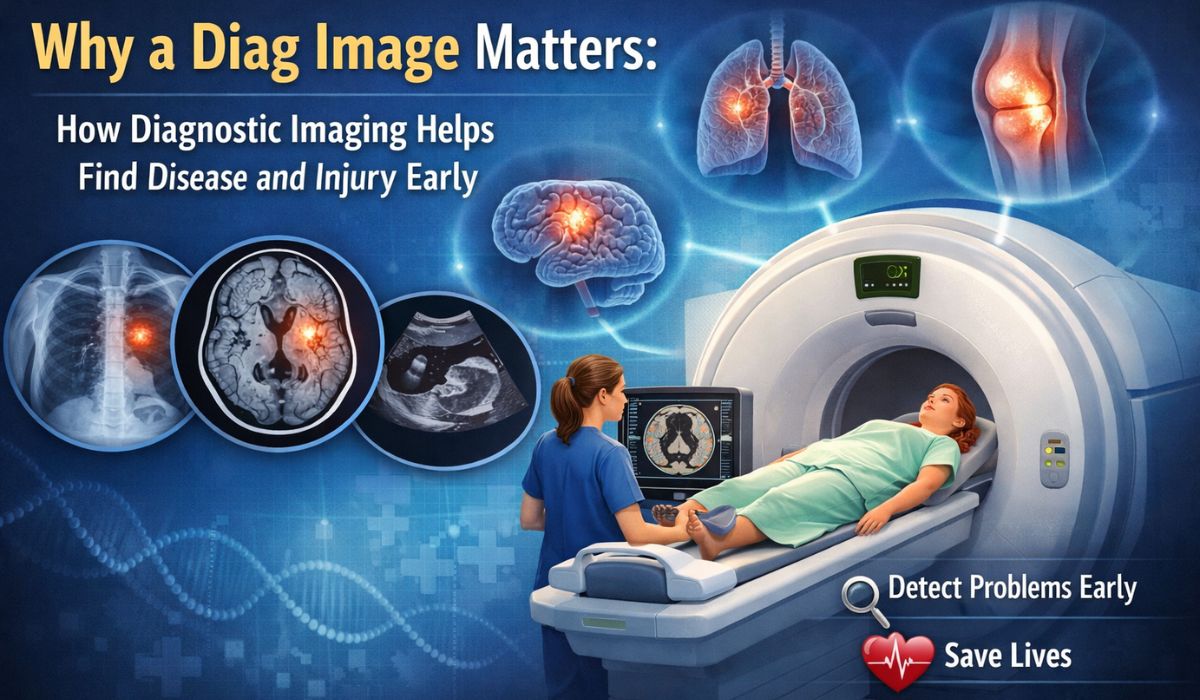
A Diag Image can give doctors an early look at what is happening inside the body without the need for major surgery. That is why diagnostic imaging has become such an important part of modern care. When a person has pain, swelling, breathing trouble, dizziness, or signs of injury, an imaging test can help show the possible cause. It can reveal a broken bone, a blocked blood vessel, a lung infection, internal bleeding, or changes in an organ before the problem becomes more serious. In many cases, early imaging leads to early treatment, and early treatment often gives people a better chance of recovery.
This matters even more because many diseases do not show obvious symptoms at first. A person may feel tired, have mild discomfort, or notice nothing unusual at all. Even so, there may be a problem developing inside the chest, brain, abdomen, joints, or soft tissue. A Diag Image helps turn uncertainty into clearer medical information. Instead of guessing, doctors can study real pictures of the body and use them to decide what should happen next. That can reduce delays, improve accuracy, and help patients feel more informed about their own health.
What a Diag Image Really Means
A Diag Image is a picture created during a diagnostic imaging test. These images allow healthcare teams to examine bones, muscles, organs, blood flow, and other internal structures. Different tools are used depending on what needs to be checked. X-rays are often used for bones and chest concerns. Ultrasound is common for pregnancy, soft tissue, and organs. CT scans create detailed cross-sectional views. MRI scans show soft tissue, the brain, the spine, and joints in great detail. Nuclear imaging and PET scans can help doctors study body function as well as structure.
The key idea is simple: imaging helps doctors see more than a physical exam alone can reveal. A patient may describe symptoms clearly, and a doctor may perform a careful examination, but that still may not show the full picture. A scan can confirm whether there is inflammation, a tear, a mass, fluid buildup, narrowing, or other hidden changes. It can also help rule out serious conditions, which is just as important. For many patients, one of the greatest benefits of imaging is that it moves the conversation from uncertainty toward answers.
How Imaging Supports Early Detection
One major reason a Diag Image matters is its role in early detection. Many health conditions are easier to manage when found early. This includes fractures, tumors, strokes, pneumonia, internal bleeding, spinal damage, and joint disease. In emergency situations, imaging can help doctors act fast. A brain scan may show whether stroke symptoms are caused by bleeding or blockage. A chest scan may help explain sudden shortness of breath. An abdominal scan may reveal appendicitis or another urgent problem before it becomes life-threatening.
Early detection is not only important in emergencies. It also matters in routine care and follow-up. A patient with recurring headaches may need imaging to check for structural changes. Someone with long-term back pain may need a scan to look at discs, nerves, or the spine. A person with ongoing cough, unexplained weight loss, or unusual lab results may need chest or abdominal imaging to look deeper. When doctors use a Diag Image at the right time, they may catch a problem before it spreads, worsens, or causes permanent damage.
ALSO READ THIS :- Whaleness Overview: How the Term Is Used in Culture and Social Media
Common Types of Diagnostic Imaging
The type of scan used depends on the symptom, body part, and medical goal. Each test has a different strength, and understanding those differences can help patients feel less overwhelmed. An X-ray is fast and commonly used for broken bones, dental issues, and chest concerns. Ultrasound uses sound waves and is often chosen for organs, blood flow, pregnancy, and some soft tissue problems. CT scans combine multiple images to create detailed views, which is useful for trauma, internal injury, and many organ conditions. MRI uses magnets and radio waves to produce detailed images, especially for the brain, nerves, joints, and muscles.
Doctors do not choose these tests at random. They select the one that best matches the patient’s symptoms and medical history. A twisted ankle may need a simple X-ray, while a suspected ligament tear may need an MRI. A person with severe abdominal pain may first get an ultrasound or CT scan depending on the situation. The goal is not to order more testing than needed, but to order the right test at the right time. That is what makes imaging so valuable in real-world care.
What Diagnostic Imaging Can Help Find
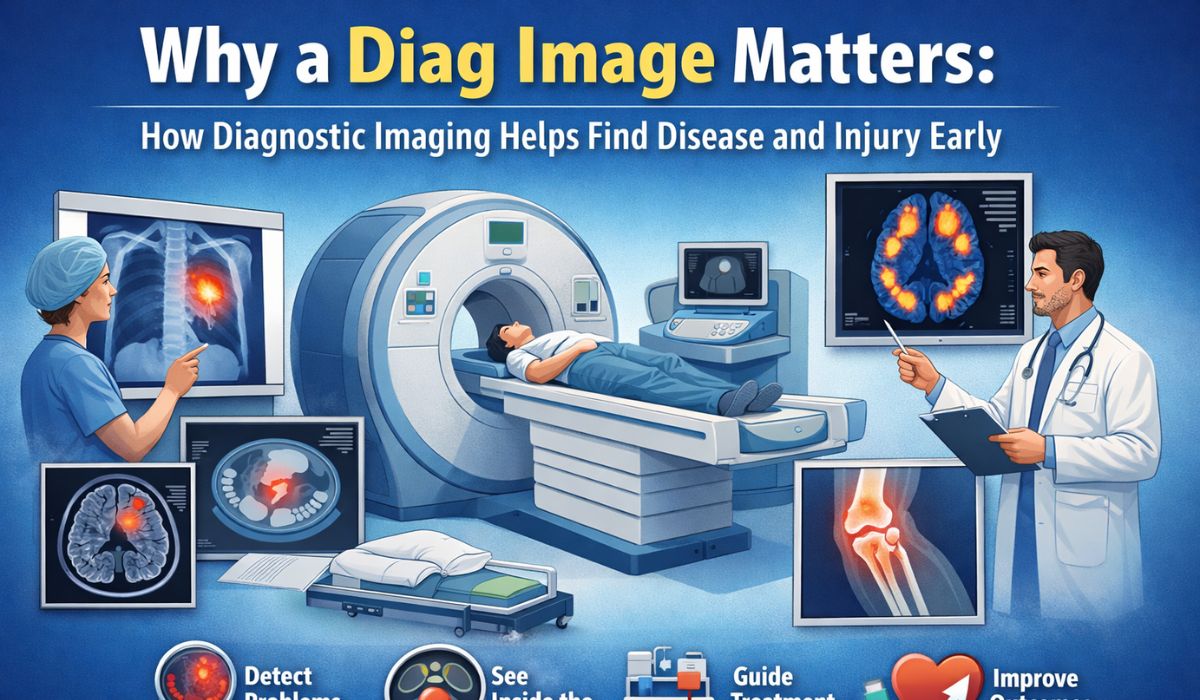
A Diag Image can help detect a very wide range of medical problems, from mild issues to serious disease. It can show fractures, joint damage, muscle tears, kidney stones, gallstones, blood clots, tumors, lung changes, infections, swelling, and fluid collection. It may also help identify signs of chronic conditions such as arthritis, spine degeneration, liver disease, and heart-related changes. In children, adults, and older people, imaging often becomes a key step in understanding symptoms that cannot be explained through routine observation alone.
Here are some common areas where imaging plays a major role:
- finding broken bones after falls, sports injuries, or road accidents
- checking the lungs for infection, fluid, or other chest problems
- looking for organ changes in the liver, kidneys, gallbladder, or pancreas
- examining the brain after a head injury, seizure, or stroke symptoms
- studying joints, muscles, tendons, and ligaments when pain does not improve
- tracking healing, treatment progress, or changes in a known condition
This range of uses shows why diagnostic scans are now part of both emergency medicine and planned care. They do not replace doctors, but they make medical decisions much more informed.
Why Faster Answers Can Change Outcomes
When symptoms are serious, time matters. A fast and accurate scan can change the entire course of care. If someone has chest pain, imaging may help rule out certain dangerous causes and guide the next step quickly. If a child has severe abdominal pain, a scan may help determine whether surgery is needed. If an older adult falls and seems fine at first, imaging may still reveal hidden injury. In each case, faster answers can prevent complications and reduce the chance of delayed treatment.
Even outside urgent care, faster answers can make a major difference in quality of life. Many patients spend weeks or months trying to understand pain, weakness, swelling, or unexplained symptoms. When a Diag Image identifies the source, treatment can become more targeted. That may mean physical therapy instead of rest alone, surgery instead of repeated temporary treatment, or medication changes based on what the scan reveals. The value of imaging is not just that it shows a problem. It often helps shorten the path to the right care plan.
The Role of Imaging in Injuries
Injury is one of the most common reasons people need a scan. After sports accidents, slips, car crashes, workplace injuries, or heavy strain, the body may suffer damage that cannot be judged from the outside. A person may have swelling and pain, but the true problem could be a fracture, ligament tear, tendon injury, dislocation, or internal bleeding. Imaging helps sort out the difference. That matters because the treatment for each of those injuries may be very different.
This is especially important when symptoms do not match the visible damage. A person may be able to walk on a fractured foot, or move an arm despite a serious shoulder injury. Another person may have severe pain but no broken bone at all, which could point to soft tissue damage instead. Without proper imaging, treatment may be delayed or directed the wrong way. A Diag Image helps doctors know whether the body needs rest, a brace, surgery, rehabilitation, or urgent intervention.
The Role of Imaging in Disease Detection
Diagnostic imaging is also central in finding disease before it becomes advanced. Many illnesses change the shape, size, or appearance of organs and tissue. A scan may show a growth, blockage, inflammation, or structural change that helps explain symptoms. In some cases, imaging also supports screening and monitoring. For example, doctors may use scans to follow known lung nodules, examine suspicious masses, or study how well treatment is working over time.
This ability to monitor change is one of the quiet strengths of imaging. It is not only about finding a problem once. It is also about seeing whether the problem is stable, improving, or worsening. A patient receiving treatment for a condition may need repeat scans to measure progress. Another person with chronic pain may need imaging after symptoms change. In both cases, updated pictures can guide safer and smarter decisions. That is one reason imaging remains valuable long after the first diagnosis.
What Patients Should Expect During a Scan
Many people feel nervous before an imaging test, especially if they have never had one before. In most cases, the process is simple and carefully guided by trained staff. Some scans take only a few minutes, while others take longer. A patient may need to lie still, hold their breath for a short time, or change position so the machine can capture clear images. For ultrasound, a gel is placed on the skin. For CT or MRI, contrast material may sometimes be used to improve detail, depending on the reason for the scan.
Preparation varies by test. Some scans require fasting, while others do not. Metal objects may need to be removed before MRI. Patients should always tell staff about pregnancy, allergies, kidney issues, implants, or anxiety about enclosed spaces. Most imaging tests are painless, though some may feel uncomfortable because of positioning or the need to stay still. Knowing what to expect can help people feel calmer and more cooperative, which often leads to better image quality and clearer results.
Understanding Benefits and Limits
A Diag Image is powerful, but it is not perfect. It gives doctors valuable information, yet it is only one part of the full medical picture. Symptoms, exam findings, medical history, blood work, and follow-up care still matter. Sometimes a scan clearly identifies the cause of a problem. Other times it narrows the possibilities but does not provide a final answer by itself. That is normal in medicine. A useful scan is not only one that confirms a diagnosis. It may also rule out dangerous conditions and help guide the next step.
It is also important to understand that not every person with pain or illness needs imaging right away. Doctors weigh the likely benefit against the cost, time, and any test-related concerns such as radiation exposure. X-rays and CT scans use radiation, while MRI and ultrasound do not. That is why the best approach is careful, thoughtful use of imaging rather than automatic testing. The real strength of diagnostic imaging comes from using the right tool at the right moment for the right reason.
ALSO READ THIS :- Jixkidzo Features Breakdown: AI Automation, Workflow Support, and Scalable Solutions
Why Skilled Reading Matters
The image itself is only part of the process. The other part is expert interpretation. Radiologists and other trained specialists study the images and look for patterns that match injury or disease. Small details can matter a great deal. A tiny fracture line, a faint shadow in the lung, or subtle swelling around tissue may change the diagnosis. That is why clear imaging and skilled review go together. One without the other is not enough.
Doctors then combine the scan findings with the patient’s condition. A report may say there are mild changes, but whether those changes explain symptoms depends on context. This is why some results sound more complicated than they feel. A person may have “degenerative changes” on a scan but only mild discomfort, while someone else may have a smaller visible issue causing major pain. Imaging helps best when it is interpreted in a careful, patient-centered way.
Final Thoughts
A Diag Image matters because it helps doctors see what the body cannot easily show from the outside. It can reveal injuries, confirm disease, rule out dangerous conditions, and support earlier treatment. In both urgent and routine care, imaging often turns a confusing situation into one with a clearer direction. That can reduce fear, improve decision-making, and lead to better outcomes for patients of all ages.
The real value of diagnostic imaging is not simply in producing pictures. Its value is in helping people get answers sooner and care that fits their needs more closely. Whether the concern is a broken bone, severe pain, breathing trouble, or signs of disease, the right scan can make a major difference. When used wisely and read carefully, imaging becomes one of the most useful tools in modern medicine for finding disease and injury early.
FAQs
1. What is a Diag Image?
A Diag Image is a medical image created to help doctors examine the inside of the body. It may come from an X-ray, ultrasound, CT scan, MRI, or another imaging method.
2. Why would a doctor order diagnostic imaging?
A doctor may order imaging to investigate pain, injury, swelling, breathing problems, or other symptoms that need a closer look. It helps confirm or rule out possible causes and guides treatment decisions.
3. Can a Diag Image find disease before symptoms get worse?
Yes, in many cases imaging can show early signs of disease or injury before the problem becomes more severe. This can lead to earlier treatment and a better chance of recovery.
4. Are all imaging tests the same?
No, different tests serve different purposes. X-rays are often used for bones, ultrasound for organs and soft tissue, CT for detailed internal views, and MRI for high-detail images of soft tissue, nerves, and joints.
5. Is diagnostic imaging safe?
Most imaging tests are considered safe when used appropriately. Some tests use radiation, while others do not, so doctors choose the option that offers the most benefit with the least risk.
6. Does imaging always give a final diagnosis?
Not always. Imaging often provides important clues, confirms a likely problem, or helps rule out serious conditions, but doctors may still need exams, lab tests, or follow-up care to reach a final diagnosis.
FOR MORE CONTENT: CLOCKMAGAZINE