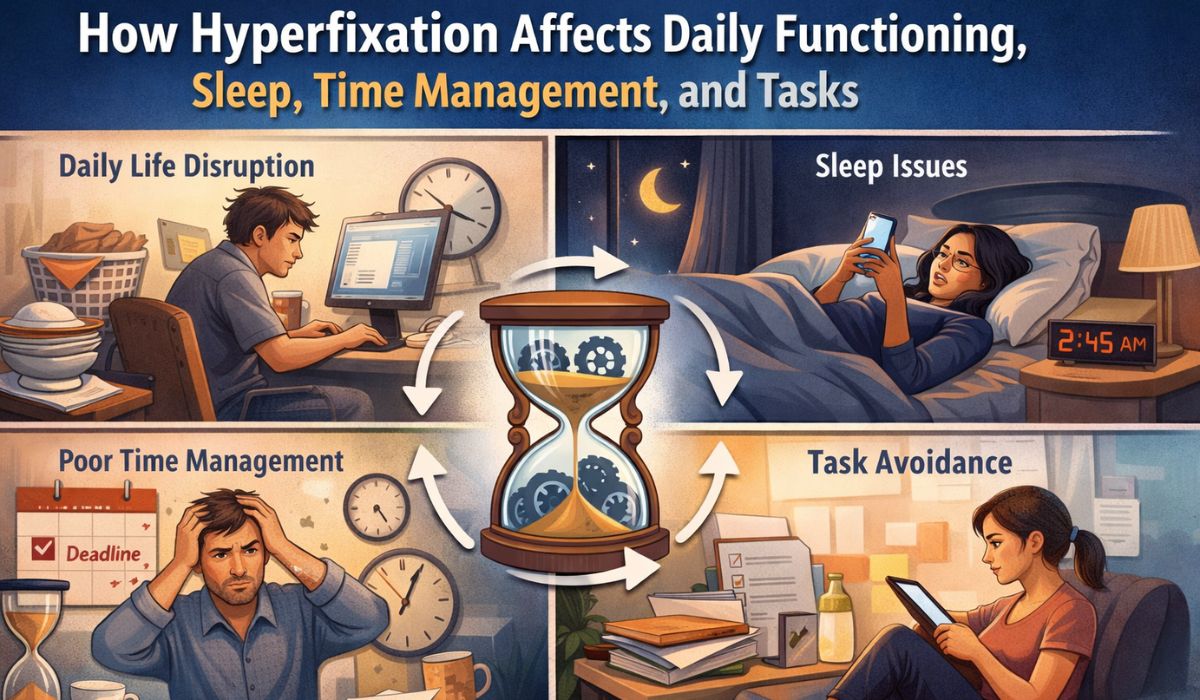
Hyperfixation is a state of intense mental focus on a single subject, activity, idea, or goal for a long period of time. It can feel absorbing, rewarding, and even productive at first. A person may become so deeply involved in one thing that the rest of the day seems to fade into the background. Meals get delayed, messages go unanswered, and basic plans are forgotten. This kind of intense focus is often talked about in connection with attention-related conditions, but it can also be understood more broadly as a pattern of attention that pulls a person fully into one area while pushing everything else aside.
For many people, this experience is confusing because it does not look like a lack of attention. In fact, it may look like the opposite. Someone might spend hours researching a topic, building something, playing a game, watching videos, organizing details, or working on a creative project without noticing the passage of time. That is why hyperfixation can be both useful and disruptive. It may help a person learn quickly or make progress on something they care about, but it can also affect daily functioning, sleep, time management, and the ability to complete less exciting tasks. Understanding how this pattern works is the first step toward managing it in a healthy way.
What Hyperfixation Really Looks Like in Everyday Life
In real life, this intense focus often begins with genuine interest. Something captures attention and feels mentally “sticky.” The brain keeps returning to it because it feels important, exciting, calming, or deeply satisfying. A person might think about it during work, talk about it often, and spend large amounts of free time on it. The subject itself can vary widely. It might be a hobby, a TV series, a person, a game, a work project, a health topic, a collecting habit, or a personal goal. What matters most is not the topic, but the level of attention and how hard it becomes to step away from it.
This pattern can be especially hard to notice at first because it may appear positive. Deep focus is often praised in school, work, and creative life. People admire dedication and passion. But the problem begins when that focus becomes so strong that it weakens balance. The person may not choose to ignore other needs; instead, their attention becomes so narrow that other needs lose urgency. That is why this experience is not simply “liking something a lot.” It is a powerful pull that changes how time, energy, and priorities are handled throughout the day.
Daily Functioning Can Start to Narrow
One of the clearest ways this pattern affects life is through daily functioning. Basic routines that support health and stability can begin to slip. A person may forget to eat on time, delay showering, put off cleaning, or ignore small responsibilities that usually keep life running smoothly. These are not always conscious choices. When a person is deeply absorbed, switching attention can feel mentally uncomfortable. Even simple tasks may seem annoying, pointless, or strangely difficult compared to the activity holding their focus.
Over time, this can create a cycle of imbalance. The more someone delays routine needs, the more stress builds in the background. Dishes pile up, inboxes grow, deadlines creep closer, and physical needs go unmet. Then the person may feel overwhelmed and return to the same absorbing activity for relief, comfort, or escape. In that way, intense focus can become tied not just to interest, but also to stress management. What started as enjoyment may slowly become a way of avoiding the pressure created by neglected daily life.
ALSO READ THIS :- What Happened to Samuel Nowlin Reeves Jr? Keanu Reeves’ Complex Family Story
The Effect on Work, Study, and Responsibility
At work or school, this type of focus can be a mixed experience. On one hand, it may lead to strong output in a narrow area. A person might produce detailed work, solve a difficult problem, or spend hours learning a complex topic. They may even be seen as highly driven when they are locked into one goal. On the other hand, real life rarely rewards narrow effort alone. Most jobs and study environments require balance, flexibility, and the ability to shift attention between many tasks.
That is where problems often appear. A person may spend too much time on one part of an assignment while ignoring the rest. They may perfect a small detail and miss the deadline for the whole project. They may open a work task and suddenly dive into side research that feels related but is not actually necessary. This can create frustration because the person may feel busy all day and still end up behind. The issue is not always laziness or poor motivation. Often, it is difficulty regulating attention, deciding when “enough” is enough, and stepping away before the focus becomes too costly.
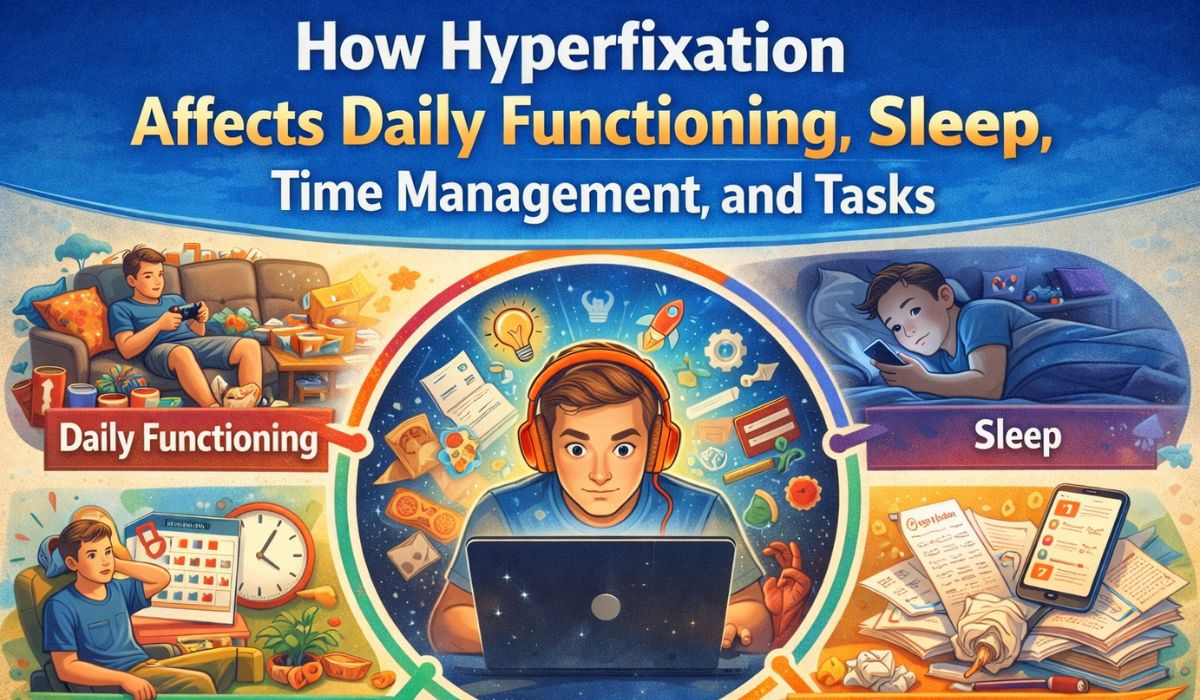
Where This Tends to Show Up Most
This pattern can affect many parts of life, but some areas are especially common:
- work projects that become overly detailed or hard to stop
- school assignments that lead to deep research but weak deadline control
- career goals that take over personal time and rest
- hobbies that crowd out meals, sleep, or social plans
- entertainment interests, fandoms, or games that absorb entire evenings
- personal achievements or self-improvement plans that become mentally all-consuming
These examples show why the issue is not always the activity itself. Many of these interests are healthy in normal amounts. The challenge begins when one area starts to dominate attention so strongly that the rest of life becomes harder to manage.
Sleep Often Suffers First
Sleep is one of the first things to be affected because it is easy to delay and easy to underestimate. A person may tell themselves they will stop in ten minutes, but those ten minutes turn into two hours. When the mind is highly engaged, bedtime can feel like an interruption rather than a need. This is especially true when the activity provides stimulation, comfort, or a sense of progress. The brain may resist stopping because it does not want to leave that rewarding state.
Poor sleep then makes everything else harder. The next day, attention becomes less steady, emotional control may drop, and routine tasks can feel heavier. Ironically, that can make the person even more likely to return to the same strong interest because it feels easier than dealing with tiredness, boring work, or social demands. In this way, sleep loss and intense focus can feed each other. A short-term habit of staying up late can turn into a long-running pattern that affects mood, memory, physical energy, and overall functioning.
Why Time Management Gets Distorted
Time management problems linked to this kind of focus are not always caused by carelessness. Often, the real issue is time blindness, or a weak sense of how much time is passing in the moment. When someone is deeply absorbed, an hour may feel like fifteen minutes. They may honestly believe they just started, only to discover that half the day is gone. This disconnect between felt time and real time can create serious problems with appointments, deadlines, household duties, and rest.
Another part of the problem is transition difficulty. Starting one task and ending another both require mental energy. A person may know they need to switch, but still feel stuck. They might keep going because they are “almost done,” even when they have been saying that for a long time. Or they may delay starting an important task because they are still mentally attached to the previous one. Time management, then, is not just about using a planner. It is also about managing attention shifts, emotional momentum, and the discomfort of leaving something that feels highly rewarding.
Tasks That Feel Boring Become Even Harder
A major challenge is the contrast between highly engaging tasks and low-interest ones. After spending hours in deep focus on something stimulating, ordinary tasks can feel painfully dull. Laundry, emails, meal prep, paperwork, and routine planning may seem harder than they really are because the brain is comparing them to something much more rewarding. This can create an uneven life where only exciting or emotionally loaded tasks get attention, while necessary but less interesting tasks are constantly postponed.
This contrast also affects motivation. A person may start believing they can only function when they feel strong interest, which can weaken confidence in their ability to handle ordinary responsibilities. Over time, they may develop guilt about unfinished tasks and shame about being “bad at simple things.” That emotional weight matters. It is often not the missed task alone that hurts, but the story a person tells themselves afterward. They may feel unreliable, lazy, or out of control, even when the real issue is difficulty managing focus, transitions, and competing priorities.
The Emotional Side of Intense Focus
This experience is not only about productivity and routines. It also affects emotional life. When a person is deeply absorbed in one subject, they may feel relief, joy, excitement, or calm while engaged with it. But when interrupted, they may feel irritation, restlessness, or sudden emptiness. That emotional shift can be confusing for both the person and the people around them. Others may see the reaction as dramatic, while the person experiencing it feels like they have been pulled away from the one thing helping them feel steady or engaged.
Relationships can also be affected. Friends, partners, or family members may feel ignored when one topic takes over attention for long stretches. Conversations may become one-sided, plans may be forgotten, and emotional availability may shrink. This does not mean the person does not care. Often, they care deeply, but their attention system is not well balanced in the moment. Recognizing this can reduce blame and open the door to more practical support, better boundaries, and more honest conversations at home and at work.
When It Helps and When It Hurts
It is important to say that intense focus is not always harmful. In the right setting, it can support learning, creativity, problem-solving, and deep enjoyment. Many people build valuable skills because they can spend long periods fully engaged in something meaningful. This can lead to expertise, innovation, and a strong sense of purpose. It can also offer comfort during stressful times by providing structure and emotional relief.
The key question is whether the focus is working with the rest of life or against it. A healthy pattern supports goals without damaging sleep, daily care, work balance, and relationships. A harmful pattern starts to crowd out basic needs and makes it harder to function consistently. The goal is not to remove deep interest or passion. The goal is to build enough awareness and structure so that strong focus can exist without taking over everything else.
ALSO READ THIS :- Fkstrcghtc Explained: Cybersecurity, Encryption Risks, and Hidden Digital Threats
Practical Ways to Manage It Better
Managing this pattern starts with noticing early signs. A person may begin skipping breaks, feeling annoyed by interruptions, ignoring body signals, or losing track of time. Catching those signs early makes it easier to step back before problems grow. External supports are often more helpful than willpower alone. Timers, visible clocks, meal reminders, bedtime alarms, written task limits, and scheduled breaks can all help interrupt the tunnel effect of deep focus.
It also helps to plan transitions instead of expecting them to happen naturally. A person might set a short wrap-up routine before switching tasks, such as writing down the next step, saving open tabs, or choosing a restart time for later. That reduces the fear of losing momentum. For daily functioning, it is useful to connect basic needs to fixed anchors in the day, like eating before starting a favorite activity or doing one household task before opening a game or project. Small rules like these can protect health and structure without removing the joy of intense interests.
Final Thoughts
Hyperfixation can feel powerful because it changes more than attention alone. It changes how a person experiences time, effort, rest, and responsibility. It can make one task feel vivid and important while everything else fades into the background. That is why it has such a strong effect on daily functioning, sleep, time management, and task completion. Left unchecked, it can create stress, exhaustion, missed responsibilities, and strained relationships. But when understood clearly, it can also be managed with compassion and practical tools.
The most helpful approach is balance, not blame. A person does not need to feel ashamed for having strong interests or a deeply focused mind. What matters is learning how to protect basic needs, honor responsibilities, and create smoother transitions between what feels good and what life still requires. With awareness, structure, and support, intense focus can become easier to work with rather than something that quietly runs the day.
FAQs
1. What is hyperfixation in simple terms?
It is a state of very intense focus on one thing for a long time. A person may become so absorbed that they lose track of time and ignore other tasks or needs. It often feels rewarding in the moment, which is why stopping can be hard.
2. Can hyperfixation affect sleep?
Yes, it often does. People may stay up much later than planned because they are fully engaged and do not want to stop. Over time, that can lead to tiredness, lower concentration, and more trouble managing the next day.
3. Is hyperfixation always a bad thing?
No, not always. It can support learning, creativity, and progress when it stays within healthy limits. The problem begins when it regularly interferes with rest, routines, relationships, or important responsibilities.
4. Why do simple tasks feel harder during periods of intense focus?
After doing something highly engaging, ordinary tasks may seem dull and mentally heavy by comparison. The brain may resist switching to lower-interest work, even when that work is necessary. This can lead to procrastination and frustration.
5. How can someone manage time better when they get deeply absorbed?
External tools help a lot. Timers, reminders, visual clocks, and simple routines can make it easier to notice time passing and switch tasks sooner. It also helps to set clear stopping points before starting an activity.
6. When should someone seek extra support?
Extra support may help when this pattern is causing repeated problems with sleep, school, work, relationships, or self-care. If someone feels stuck in a cycle of missed tasks, stress, or loss of control, talking with a qualified professional can be a useful next step.
FOR MORE CONTENT: CLOCKMAGAZINE