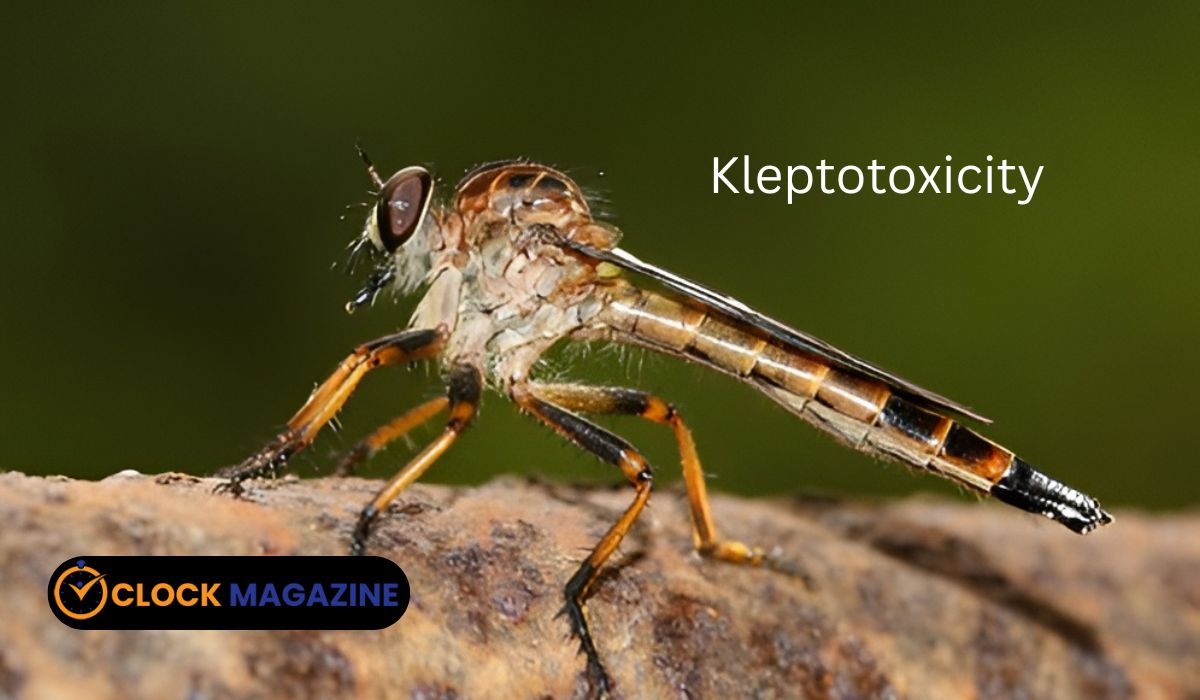
Kleptotoxicity is a useful way to describe a strange but fascinating survival behavior in the insect world. In simple terms, it refers to a case where an insect gets toxic chemicals from another living source instead of making those chemicals on its own. That source may be a plant-fed insect, a caterpillar, or another animal that already carries defensive compounds. The result is the same: the thief gains extra chemical protection that may help it survive predators, compete for mates, or improve its place in the food web.
This idea is interesting because it changes how many people think about insect defense. Most readers are familiar with insects that bite, sting, spray, or taste bad. But kleptotoxicity adds another layer. It shows that some insects do not just rely on what they are born with. They may actively seek toxic material from outside sources and use that stolen chemistry as part of their own defense system. That makes the topic important for anyone who wants to understand insect behavior, chemical ecology, mimicry, survival, and adaptation in nature.
What Kleptotoxicity Means in Simple Terms
At its core, kleptotoxicity combines two ideas: stealing and toxicity. The behavior involves taking toxic or protective compounds from somewhere else and using them for personal benefit. In insects, this can happen when one species feeds on toxic material that another species has already gathered from a host plant. It can also happen when an adult insect targets larvae or other soft-bodied organisms that contain useful chemicals. Instead of hunting for protein alone, the insect may be after a very specific chemical reward.
This matters because toxins are not always easy to find, process, or survive. Some compounds are powerful enough to harm both predators and the insects that handle them. So when an insect uses kleptotoxicity, it is not just stealing food. It is often stealing chemistry. That chemistry may help make the insect distasteful, harder to attack, or more attractive in reproduction. In other words, the behavior is not random. It can be tied to defense, mating success, and long-term survival.
Why Toxic Compounds Matter to Insects
Toxic compounds play a major role in insect survival. A bright butterfly, moth, or beetle may look delicate, but its body can contain chemicals that make predators regret the attack. Birds, reptiles, and small mammals often learn quickly which insects are safe to eat and which ones are best avoided. This is why many chemically protected insects also show warning colors. The color says “stay away,” while the toxin makes that warning honest.
These compounds can also affect more than defense. In some insect groups, chemicals influence courtship, scent production, and reproductive success. A male may use stolen compounds to help produce signals that matter during mating. A female may benefit indirectly through stronger offspring or better protection from predators. So when we talk about kleptotoxicity, we are not just talking about poison in a dramatic sense. We are talking about chemical tools that shape behavior, reproduction, and ecological relationships.
How Kleptotoxicity Differs From Ordinary Feeding
Normal feeding is about energy, growth, and basic nutrition. An insect eats leaves, sap, nectar, pollen, fungi, or prey to stay alive and reproduce. Kleptotoxicity is more specialized. The insect is not simply filling its stomach. It is targeting a chemical advantage. That makes the behavior more selective and more unusual than basic herbivory or predation.
It also differs from ordinary scavenging. If an insect feeds on a dead body for protein, that is one thing. But if it seeks out a living or recently injured source because that source holds valuable defensive compounds, the behavior becomes more specific. In that case, the goal is not just calories. The goal is a borrowed chemical defense. This is what makes the idea so memorable in entomology. It reveals that insects can be surprisingly strategic in how they use the bodies and chemistry of other organisms.
ALSO READ THIS :- Brasssmile Review: Is It Worth Your Time and Interest?
The Link Between Host Plants, Caterpillars, and Adult Insects
Many toxic insects do not create their protective chemicals from scratch. Instead, they get them from host plants during the larval stage. Caterpillars that feed on certain toxic plants may store those compounds in their bodies. Later, predators learn that these insects are not worth eating. This basic pattern is already well known in nature, and it helps explain why some insects are so closely tied to specific plants.
Kleptotoxicity adds a twist to that process. An adult insect may gain access to those same plant-based compounds by taking them from another insect that already did the hard work of collecting them. In effect, the first insect fed on the plant, stored the toxins, and became a moving chemical package. The second insect then taps into that package. This creates an unusual chain of transfer from plant to larva to adult thief. It is one of the clearest examples of how plant chemistry can shape animal behavior in indirect ways.
A Known Example in Butterflies
One of the most striking examples connected to this idea comes from milkweed butterflies and related species. Researchers observed adult butterflies scratching and feeding from caterpillars that had fed on chemically rich plants. The adults appeared to be targeting the chemical content inside those bodies rather than behaving like ordinary predators. This behavior stood out because it did not fit neatly into the usual boxes of predation, parasitism, or simple scavenging.
What makes this example especially important is that it shows how adult insects may continue collecting defensive or mating-related compounds after the larval stage is over. That means chemical survival does not always end with caterpillar feeding. Some adults may keep searching for these valuable substances later in life. This helps explain why kleptotoxicity is such a powerful subject. It shows that insect survival can depend on chemistry gathered across multiple life stages, not just one.
Why an Insect Would Risk This Behavior
Stealing toxins is not easy or risk-free. The target may resist, escape, or fight back. The thief also has to handle chemicals that may be dangerous in high amounts. So why do it? The answer is simple: the payoff may be worth the danger. An insect that gains extra chemical protection may lower its chance of being eaten. In some cases, it may also improve its chances during courtship and mating.
This kind of risk-reward balance is common in nature. Animals often take short-term risks for long-term gain. For insects, the gain may be survival in a predator-rich environment or a better chance to reproduce. If a stolen compound increases body defense, strengthens a scent used in courtship, or adds value during mating, then kleptotoxicity becomes more understandable. What looks strange to us may be a practical solution shaped by evolution over time.
The Benefits This Behavior May Provide
Kleptotoxicity can offer several possible advantages, especially when toxic resources are scarce or seasonal. In some habitats, the right host plants may not always be available in the right form. In other cases, adult insects may need more chemical material than they carried forward from earlier life stages. Borrowing or stealing toxins from another source can help fill that gap and keep the insect chemically protected.
Key survival highlights
- stronger protection against predators
- access to useful compounds without feeding directly on the original plant
- possible support for mating signals or reproductive success
- a backup strategy when toxic host plants are limited
- better chances of survival in competitive or risky habitats
These benefits help explain why the behavior continues to attract scientific attention. It is not just odd. It may be efficient under the right conditions. If a species can gain defense or reproductive value from stolen chemistry, that behavior can become a meaningful part of its survival strategy.
The Costs and Limits of Toxic Borrowing
Even useful defenses come with costs. Carrying toxins in the body can place stress on an insect’s system. Some chemicals may be hard to store safely, hard to move through tissues, or costly to manage over time. An insect that gains strong defense may also pay a hidden price in energy, body condition, or oxidative stress. In nature, there is often no free advantage. Every useful trait tends to come with some trade-off.
There are also ecological limits. The behavior only works when the right chemical source is available. If the target species disappears, changes host plants, or becomes harder to access, the thief loses its supply. Predators may also adapt over time. Some learn to avoid warning colors, while others evolve partial tolerance to toxins. So kleptotoxicity should not be seen as a perfect solution. It is one strategy among many, and its value depends on context.
Warning Colors, Mimicry, and Chemical Defense
Kleptotoxicity connects closely with warning coloration. Many toxic insects stand out with bold colors such as orange, yellow, black, or white. These patterns are not only attractive to human eyes. They serve as signals to predators. The message is simple: attack me and you may regret it. If an insect steals toxins and becomes better defended, those warning signals may become more honest and more effective.
This also ties into mimicry. Some harmless insects survive by copying the look of toxic ones. But true chemical defense is different from a visual bluff. An insect using kleptotoxicity may support its appearance with real protection inside the body. That makes the warning more than a costume. It becomes part of a broader survival package that combines behavior, appearance, and chemistry in a highly effective way.
ALSO READ THIS :- Who Is Yuko Kubota? A Detailed Look at Her Connection to Josh Blue
What Kleptotoxicity Teaches Us About Insect Survival
The biggest lesson is that insect survival is more complex than it first appears. A tiny insect is not just reacting blindly to the world. In many cases, it is part of a deep ecological network involving plants, predators, competitors, mates, and defensive chemicals. Kleptotoxicity shows that survival can depend on smart use of resources already flowing through that network. The insect does not need to invent a new defense if it can access one that already exists.
This idea also reminds us that insects are active players in chemical ecology. They do not just eat what is nearby and hope for the best. Some species show selective feeding, targeted chemical use, and behavior that seems highly tuned to ecological pressure. For students, gardeners, naturalists, and science readers, this makes the insect world much more interesting. It is full of hidden strategies that only become visible when we look closely.
Why the Topic Matters Beyond Science
Kleptotoxicity is not only a scientific curiosity. It also matters for education, conservation, and public understanding of biodiversity. When people learn how insects survive, they often stop seeing them as simple pests. They begin to notice how each species fits into a larger living system. This change in perspective matters because insects support pollination, food webs, soil health, and ecosystem balance in ways that are easy to overlook.
The topic also encourages careful observation. A butterfly on a leaf may look peaceful, but its life may involve complex chemical decisions that shape everything from predator defense to reproduction. That deeper story can inspire interest in habitat protection, native plants, and ecological research. In that sense, kleptotoxicity is a gateway topic. It opens the door to bigger questions about adaptation, coevolution, and the hidden intelligence of natural systems.
Final Thoughts
Kleptotoxicity may sound like a rare or strange idea, but it reveals something basic and powerful about life in nature: survival often depends on using what is available in clever ways. For some insects, that means borrowing or stealing protective compounds from other organisms instead of relying only on direct feeding or built-in defenses. The behavior may look unusual, yet it fits perfectly within the logic of evolution. If a borrowed toxin improves defense, mating success, or survival, nature has reason to keep that strategy in play.
In the end, kleptotoxicity helps us see insects in a richer and more respectful way. These small animals are not simple machines. They are part of an ongoing chemical contest shaped by plants, predators, and the need to reproduce. By studying this behavior, we learn more than one unusual fact. We learn how flexible, inventive, and deeply connected insect life can be.
FAQs
1. What is kleptotoxicity in simple words?
Kleptotoxicity is when an insect or other organism gains toxic chemicals from another living source and uses them for protection or another benefit. It is basically a form of chemical stealing linked to survival.
2. Is kleptotoxicity the same as being poisonous?
No. A poisonous insect may naturally contain harmful compounds, but kleptotoxicity focuses on how those compounds are obtained. The key idea is that the chemicals are taken from another source rather than produced entirely by the insect itself.
3. Do insects use kleptotoxicity only for defense?
Not always. Defense is a major reason, but stolen chemicals may also help with courtship, scent production, or reproductive success. In some species, the same compound can serve more than one purpose.
4. Are butterflies an example of this behavior?
Yes, butterflies are one of the clearest examples linked to this idea. Observations of certain milkweed butterflies suggest that adults may obtain useful chemicals from caterpillars that already contain defensive compounds.
5. Is kleptotoxicity common in all insects?
It does not appear to be common across all insect groups. It is better understood as a specialized behavior seen in certain ecological settings where chemical defense offers a strong survival advantage.
6. Why is kleptotoxicity important to study?
It helps scientists understand how insects adapt, defend themselves, and interact with plants and other animals. It also shows that survival in nature often depends on chemistry as much as strength or speed.
Accuracy note: I based the scientific framing on current material about chemical theft in insects, especially the butterfly behavior described as kleptopharmacophagy, plus research on toxin sequestration and its possible costs in butterflies.
FOR MORE CONTENT: CLOCKMAGAZINE