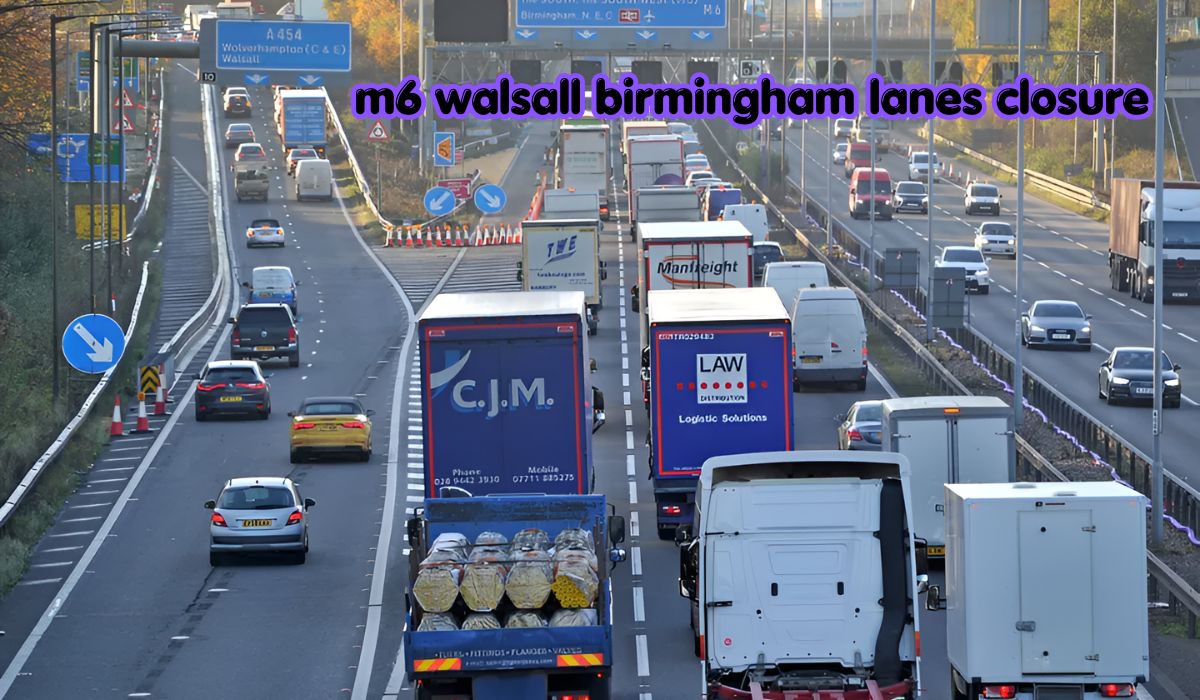
The M6 Walsall Birmingham Lanes Closure has become an important travel issue for drivers, commuters, delivery operators, and anyone passing through the West Midlands. This part of the motorway is one of the busiest links in the region, connecting traffic moving through Walsall, Great Barr, and Birmingham while also feeding into major routes such as Spaghetti Junction. When lane restrictions or full carriageway closures happen here, the effect spreads quickly. Even people who do not drive this stretch every day can feel the impact through longer journey times, late arrivals, changed bus movements, and heavier traffic on nearby local roads. Current official updates show planned work around the M6 between junctions 6 and 7, plus related activity on nearby sections including junctions 10 to 9, with a mix of bridge joint replacement, hard shoulder restrictions, and overnight traffic management.
Why This Stretch of the M6 Matters
This motorway section matters because it sits close to a dense urban area where traffic builds fast in both directions. Southbound traffic moves toward Birmingham and key city access points, while northbound traffic connects drivers back toward Walsall and beyond. If one lane is taken out of use, speeds often drop long before drivers reach the actual work zone. If a full closure is in place, the disruption can push vehicles onto surrounding A-roads and local streets that were never designed to absorb motorway-level traffic for long periods. That is why this issue has drawn so much attention. It is not simply about a single blocked lane. It is about a major transport corridor being managed in phases while large numbers of people still need to travel through it every day.
What Work Is Actually Taking Place?
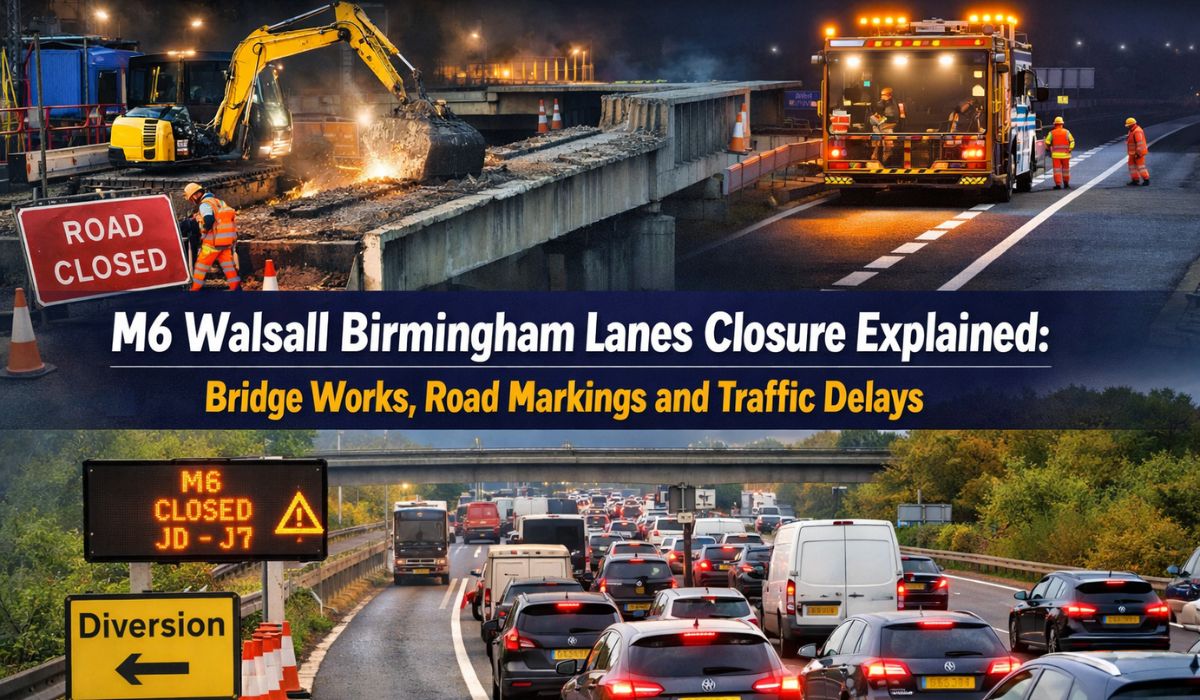
The main reason behind the current disruption is planned maintenance rather than a one-off accident. Official roadwork information points to bridge joint replacement on the M6 between junction 6 and junction 7, with staged closures in April and May 2026. Bridge joints are a small part of the road structure, but they do a big job. They allow a bridge to handle movement, weather changes, and constant vehicle pressure. When they wear down, they must be repaired or replaced to keep the route safe and stable. That is why this type of work can require full carriageway closures instead of a simple quick fix during off-peak hours. Official updates also show separate bridge joint work on the southbound side between junctions 10 and 9, which helps explain why drivers may see disruption across more than one nearby section at the same time.
ALSO READ THIS :- Chameleónovité Facts: Diet, Lifespan, and Everyday Habits
Bridge Works and Road Markings Are Both Part of the Story
Bridge repairs are only part of what drivers have been dealing with. Road maintenance in this corridor has also included resurfacing and road marking work on the southbound M6 near Birmingham during overnight periods in late March and early April 2026. That matters because many people hear about “lane closures” and assume the reason is always the same. In reality, one stretch may be under bridge repair while another is getting fresh road markings, resurfacing, or barrier-related maintenance. These tasks may sound routine, but they still need lane control, reduced speeds, workforce protection, and sometimes full overnight closures to be done properly. When several maintenance needs overlap in the same corridor, the result is a travel pattern that feels much larger than a single roadwork site.
Closure Dates, Directions, and Traffic Pattern Changes
The current schedule helps explain why drivers are seeing confusion around both directions of travel. National Highways says there is a full northbound closure between junction 6 and junction 7 from April 7 to April 24, 2026, followed by a full southbound closure between junction 7 and junction 6 from April 27 to May 6, 2026, and then another northbound closure from May 7 to May 13, 2026. A hard shoulder closure is also included during part of this work. That means traffic conditions can change not only by day, but by direction and phase. Some drivers may face a closure toward Walsall during one period and then, later, face restrictions heading toward Birmingham. This staged approach is common in major motorway maintenance because it allows crews to focus on one side at a time while keeping the wider project moving forward.
Why Delays Can Feel Worse Than the Distance Suggests
One of the most frustrating parts of motorway roadworks is that the delay often feels out of proportion to the distance affected. A closure covering only a short section can still create long queues because traffic volumes on the M6 are already heavy, especially near busy junctions. Once drivers begin braking, the queue can stretch back well beyond the visible work area. Merge behavior, last-minute lane changes, freight traffic, and unfamiliar drivers following diversions can make the slowdown even worse. In practical terms, this means a driver may lose a significant amount of time even though the work itself appears to cover only a few miles. That is especially true in and around Birmingham, where the motorway network is closely tied to local commuter movement and regional freight routes.
What Drivers Usually Notice First
For most people, the first signs of trouble are not construction equipment but changes in traffic behavior. Drivers often notice:
- sudden speed drops well before junction 7 or junction 6
- queues forming at merge points and slip roads
- heavier use of diversion routes through nearby local roads
- longer travel times during late evening, early morning, and rush-hour recovery periods
These effects are common during lane restrictions because traffic flow becomes less forgiving. Once one lane is removed or a carriageway closes, even small driving errors or hesitation can quickly turn into a much longer backup.
Diversions, Local Roads, and Wider Knock-On Effects
A major issue with the M6 Walsall Birmingham Lanes Closure is that it does not stay neatly on the motorway. Diversion routes and sat-nav rerouting can send drivers onto roads around Walsall, Great Barr, and Birmingham, increasing pressure on junction approaches and nearby urban streets. People who normally avoid the M6 may still run into slower traffic because other drivers are trying to get around the work. This is why local journeys can also take longer during major motorway closures. A person going only a short distance may find roundabouts busier, access roads more crowded, and timing less predictable. Official closure notices also point drivers to signed diversion routes, which is useful, but it can still mean a longer trip and less direct travel than usual.
ALSO READ THIS :- Madeline Schneider: Exploring the Life of Rob Schneider’s Daughter in 2026
How Drivers Can Travel More Smoothly During This Period
The best way to handle this kind of disruption is to think ahead rather than react at the last minute. Drivers using this route should check whether their journey falls during a northbound or southbound closure phase, because the impact can differ sharply by direction. It also helps to allow extra time even when the trip looks short on a map. A route that normally feels routine can become much slower once diversions, lane merges, and local road spillover start building. For commercial drivers, airport travelers, and anyone with a time-sensitive appointment, leaving earlier is often the safest choice. Another smart move is to stay alert for changing signs rather than relying only on memory, because this project is being handled in stages and conditions can shift as work progresses.
What This Means in the Bigger Picture
Although closures are inconvenient, the work is happening for a reason. Bridge joints, resurfaced lanes, clear road markings, and safer traffic management all support the long-term reliability of a heavily used motorway. The short-term pain is real, especially for daily commuters and regional freight traffic, but delayed maintenance would likely create larger safety and durability problems later. In that sense, the current roadworks should be seen as part of a broader effort to keep a critical transport route functioning over time. For anyone trying to understand the story behind the M6 Walsall Birmingham Lanes Closure, the key point is simple: this is not random disruption. It is a planned package of motorway maintenance involving bridge works, lane control, hard shoulder restrictions, and traffic management that is likely to affect journeys in phases rather than in one single event.
Final Thoughts
The current closure story is bigger than one blocked lane or one frustrating delay. It reflects a concentrated period of work on one of the busiest motorway corridors in the West Midlands. Drivers heading between Walsall and Birmingham need to think about direction, dates, nearby junctions, and possible knock-on congestion on local roads. With bridge joint replacement between junctions 6 and 7, related work near junctions 10 and 9, and resurfacing and road marking activity affecting nearby sections, the best approach is to expect changing conditions and plan journeys carefully. For local travelers, commuters, and visitors alike, understanding the reason behind the disruption makes it easier to deal with it calmly. The roadworks may slow travel now, but the goal is a safer and more dependable route in the months ahead.
FAQs
1. What is causing the M6 Walsall Birmingham lanes closure?
The current disruption is mainly tied to bridge joint replacement and related motorway maintenance. Some nearby work has also involved resurfacing and road markings, which can require lane restrictions or overnight closures to keep workers safe and traffic controlled.
2. Which junctions are most affected?
The most important area in the current schedule is between junction 6 and junction 7, where full northbound and southbound closures are being carried out in phases. There is also separate southbound bridge joint work between junctions 10 and 9, so nearby traffic conditions can feel broader than one single closure point.
3. Are the closures happening in both directions?
Yes, but not all at once in the same way. The official schedule shows northbound and southbound closures happening in different phases, which is why drivers need to pay attention to dates and direction before setting off.
4. Will local roads around Walsall and Birmingham be affected too?
In many cases, yes. When the M6 is restricted, traffic often shifts onto local roads and signed diversion routes, which can increase pressure on junction approaches, A-roads, and urban traffic networks around the affected corridor.
5. Is this only an overnight issue?
Not entirely. Some related roadwork has taken place during overnight windows, especially resurfacing and road marking activity, but the main bridge joint replacement schedule also includes longer closure periods and hard shoulder restrictions that extend beyond a single night.
6. How should drivers prepare before using this route?
The most practical steps are to check the direction of travel, allow more time than usual, and expect congestion near affected junctions. It also helps to stay flexible, because staged motorway projects can change traffic patterns even when the journey seems familiar.
FOR MORE CONTENT: CLOCKMAGAZINE