For many people outside Norway, the word Viltnemnda looks unfamiliar at first. Yet the idea behind it is easy to understand. It refers to a local public body that deals with wildlife issues at the municipal level. In simple terms, it helps a community manage wild animals, hunting-related matters, and practical wildlife concerns in a way that fits local conditions. That local role is important because animal populations, landscapes, farming patterns, and public safety needs can vary a lot from one place to another.
This topic matters because wildlife management is never only about animals. It also touches farming, road safety, outdoor life, local decision-making, and the long-term health of natural areas. A town with moose crossing roads faces different challenges than a mountain area with wild reindeer or a coastal district with different species and land use patterns. That is why a local system can be useful. Understanding how this board works gives a clearer picture of how Norway balances conservation, hunting traditions, land use, and public responsibility.
What Viltnemnda Means in Practice
At its core, Viltnemnda is a municipal wildlife board or committee. Its job is to handle the part of wildlife administration that belongs to the municipality. In some places, the municipality has a clearly named wildlife board. In other places, the same duties may be handled by another local committee. The key point is not only the name, but the function: local oversight of wildlife matters within the legal framework set by Norway.
That means this body usually works between national rules and local realities. National law sets the broad direction, but local authorities need a practical way to apply those rules on the ground. A municipality may need to deal with hunting access, local wildlife care, reports of injured animals, management measures, cooperation with landowners, or funding tied to wildlife purposes. The board is part of that local machinery. It does not replace national law, but it helps translate law into practical decisions.
Why Norway Uses a Local Wildlife Model
Norway has a strong tradition of local governance in many areas, and wildlife management fits that pattern well. Conditions are different across the country. Forest areas, mountain areas, farmland, and smaller communities all face different wildlife pressures. A local board can respond with better context than a distant national office handling every small case. It can also hear from people who live with those issues every day, including landowners, hunters, local officials, and residents.
This local model also supports flexibility. Wildlife numbers rise and fall. Animal movement changes with season, weather, food supply, and development. Road traffic and farming needs can also shift over time. A municipal board can often react more quickly to those changes and keep management practical. Local input does not mean loose control. It means decisions are still tied to law, but shaped with a better understanding of place.
The Main Areas of Responsibility
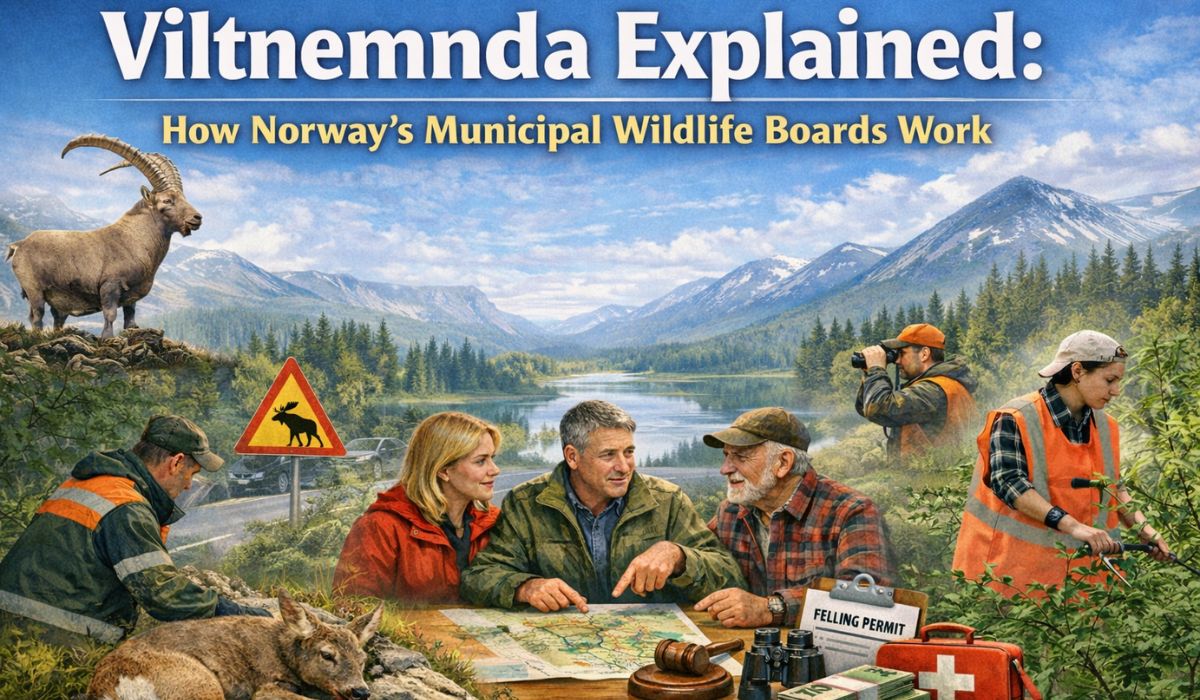
A wildlife board may be involved in several parts of local wildlife administration. The exact scope can vary by municipality, but the work often includes permits, local rules, wildlife care, follow-up on incidents, and advice to the municipality on how to manage wild animal issues. It may also help support hunting management where that connects to legal duties, species oversight, or local planning.
One useful way to understand the board is to look at the kinds of issues it is often connected with:
- local wildlife management decisions
- handling injured or dead wild animals
- cooperation around hunting and game administration
- use of wildlife-related municipal funds
- prevention of damage to agriculture or property
- practical responses to human-wildlife conflict
This list shows that the board’s work is not limited to one narrow task. It can involve both routine administration and urgent real-world situations. That mix is part of what makes the topic important to the public.
ALSO READ THIS :- VSCompany Review: Is It Worth Your Time and Investment?
How It Connects to Hunting and Game Management
Many people first hear about Viltnemnda through hunting-related issues. That makes sense because wildlife management in Norway has long been connected to game species, access, population control, and responsible use of natural resources. Local boards may be involved in decisions that affect how hunting is organized at the municipal level, especially where local follow-up and practical administration are needed.
Still, it would be too narrow to think of the board as only a hunting body. Its purpose is broader than that. Good wildlife administration has to look at sustainability, habitat conditions, public safety, and long-term population health. In practice, this means the committee sits at the meeting point of tradition and regulation. It may deal with hunting matters, but it does so within a wider public framework that includes conservation and community responsibility.
Wildlife Incidents and Public Safety
One of the most visible sides of local wildlife management is the response to injured animals, road incidents, or dead wildlife. These situations are important because they affect both animal welfare and public safety. A large animal on or near a road can create immediate danger. An injured wild animal also requires a fast and lawful response. Local systems are often best placed to organize that practical work.
This is where the board’s role becomes very real to ordinary people. A resident may never think much about wildlife administration until there is a collision with a deer, a report of a hurt animal, or concern about animals near homes or farms. Then the value of a clear local structure becomes obvious. The board itself may not perform every field action directly, but it helps shape and support the municipal system that handles these events.
The Role of the Municipal Wildlife Fund
Another important part of the picture is the municipal wildlife fund, often tied to fees and other wildlife-related income. These funds are used for approved wildlife purposes at the local level. In practice, that can include costs linked to injured wildlife response, the handling of dead animals, preventive measures, and projects that improve local wildlife knowledge or management.
This financial side matters because good wildlife administration needs more than rules. It needs resources. Training, coordination, field response, monitoring, and preventive action all cost money. The local board or related municipal system helps make sure those funds support useful and lawful purposes. That helps turn policy into action and gives municipalities tools to deal with wildlife issues before they become larger problems.
Balance Between Conservation and Daily Life
A strong wildlife system must balance more than one goal at a time. It should protect nature, but it must also account for roads, farms, local livelihoods, and people’s daily lives. That balance is one reason local boards matter. A purely abstract view of wildlife does not always work well on the ground. At the same time, decisions cannot be driven only by short-term local pressure. The challenge is to hold both sides together.
This balancing role can be difficult. Residents may disagree on what should happen in a specific case. Hunters, conservation-minded citizens, landowners, and local officials may not all see the same solution. The value of the local board is that it creates a structured way to weigh those interests within the law. It does not remove conflict, but it gives that conflict a place to be handled with procedure and public responsibility.
Local Knowledge Matters
Wildlife management improves when decision-makers understand the local landscape. Animal movement patterns, feeding areas, migration routes, and accident hotspots are often easiest to track close to the ground. Local knowledge can reveal patterns that broad national rules alone cannot capture. That does not mean local opinion should replace evidence, but it does mean practical knowledge is a real asset.
This is especially true in places where wildlife and human activity overlap every day. Farmers may notice repeated crop damage. Drivers may know where road crossings are common. Hunters may observe changes in animal presence over time. Municipal staff may see recurring patterns in wildlife calls and emergency response. When a local board works well, it helps gather that knowledge and connect it to formal decision-making.
How the Board Fits into Norwegian Governance
To understand this system fully, it helps to see that the board is part of a larger public structure. Wildlife policy in Norway is not created only at one level. National law and regulations set the framework. Regional and local actors then carry out different parts of the work. The municipal level has a clear role because many wildlife issues are practical, place-based, and recurring.
That structure also explains why the exact shape of the board may differ from one municipality to another. Some places maintain a dedicated body with a visible public identity. Others place the same duties in another committee. For people trying to understand the topic, the main thing is not whether every municipality uses the same label. What matters is that the local government has an organized way to handle wildlife responsibilities that belong at that level.
ALSO READ THIS :- Nukleotidy Overview: Their Role in DNA, RNA, and Cells
Common Misunderstandings About Viltnemnda
A common misunderstanding is that this body exists only to support hunting. Another is that it acts like an emergency animal rescue service in the narrow sense. Both views miss the broader picture. The board is part of public wildlife administration. It may touch hunting, conservation, field response, funding, and local coordination at the same time. Its role is administrative, practical, and public-facing.
Another misunderstanding is that every wildlife issue is fully decided by the same local body. In reality, wildlife governance can involve several levels of authority, depending on the species, the type of matter, and the legal context. That is normal in public administration. The local board matters because it handles municipal responsibilities well, not because it controls every wildlife question in the country.
Why the Topic Matters Beyond Norway
Even though Viltnemnda is a Norwegian term, the wider idea has global relevance. Many countries struggle with how to manage wildlife at the local level while still following national rules. The Norwegian model shows one way to combine local knowledge, public oversight, and practical response. That makes the topic useful even for readers who do not live in Norway.
In a broader sense, the subject raises universal questions. Who should make decisions about wildlife near communities? How should governments respond when animals create road risks or agricultural damage? How should public funds support wildlife care and management? And how can conservation stay practical in real places, not only in policy documents? These are questions many societies face, even if they use different institutions and names.
Final Thoughts
The simplest way to understand Viltnemnda is to see it as Norway’s local wildlife management tool at the municipal level. It helps connect law, ecology, community needs, and day-to-day reality. Its work can include permits, local administration, injured wildlife response, municipal funds, and cooperation across public and private interests. That makes it more than a formal committee name. It is part of how wildlife policy becomes real in everyday life.
For a worldwide audience, the topic is worth attention because it shows how local governance can support responsible wildlife management. The model is not just about control. It is about balance, local knowledge, lawful process, and practical action. When people ask what Viltnemnda is, the best answer is that it is a local public body designed to help communities live with wildlife in a structured, informed, and responsible way.
FAQs
1. What does Viltnemnda mean in simple terms?
It means a local wildlife board or committee in a Norwegian municipality. Its job is to deal with wildlife matters that the municipality is responsible for handling.
2. Is Viltnemnda only about hunting?
No, it is broader than hunting. It can also relate to wildlife administration, injured animals, local safety concerns, and the use of municipal wildlife funds.
3. Does every municipality in Norway have the exact same setup?
Not always. Some municipalities have a clearly named wildlife board, while others may place those duties in another local committee with a similar function.
4. Why is local wildlife management important?
Wildlife issues often depend on local conditions such as roads, farms, forests, and animal movement. A local system can respond more effectively because it understands the area better.
5. What kinds of problems can this board help address?
It may help with practical wildlife incidents, local management decisions, and measures that reduce conflict between people and wild animals. It can also support planning and funding tied to lawful wildlife purposes.
6. Why should readers outside Norway care about this topic?
Because the basic challenge is global. Many countries need ways to balance conservation, public safety, farming, and local decision-making, and this Norwegian model offers a useful example.
FOR MORE CONTENT: CLOCKMAGAZINE