Nahttypen play a central role in textile production. Whether you are sewing at home, studying fashion design, or working in industrial garment manufacturing, understanding different seam types is essential. Every piece of clothing, from a simple T-shirt to a heavy winter coat, depends on the right seam construction for strength, comfort, and appearance.
In textile processing, seams are more than just lines that hold fabric together. They affect durability, flexibility, stretch, and even how a garment feels against the skin. Choosing the correct seam type can prevent tearing, reduce bulk, and improve the overall finish. In this guide, we will explore common seam constructions, their definitions, practical examples, and how they are used in real-world textile work.
What Are Nahttypen?
Nahttypen refer to different types of seams used to join two or more pieces of fabric. A seam is created by stitching fabrics together along their edges. The method used depends on the fabric type, garment purpose, and required strength.
In textile manufacturing, seam selection is not random. Each seam type has specific characteristics. Some are designed for stretch fabrics, while others are made for heavy-duty materials like denim. Some provide a clean, decorative finish, while others are hidden inside the garment for structural support.
Understanding seam types helps improve garment quality. It also reduces fabric waste and production errors. Professionals in fashion and textile industries must know how each seam behaves under tension, washing, and wear.
Why Seam Types Matter in Textile Processing
Seams affect both function and design. If the wrong seam is used, the garment may not hold up under stress. For example, sportswear requires flexible stitching, while workwear needs strong and durable seams.
Comfort is another important factor. Bulky seams can irritate the skin. In activewear or underwear, flat seams are preferred because they reduce friction. In contrast, jackets and jeans require reinforced seams that can handle weight and pressure.
From a production point of view, seam types also impact efficiency. Some are faster to sew and require fewer steps. Others involve folding and double stitching, which increases labor time but improves durability. The right choice balances cost, strength, and appearance.
Main Categories of Nahttypen
Plain Seam (Einfache Naht)
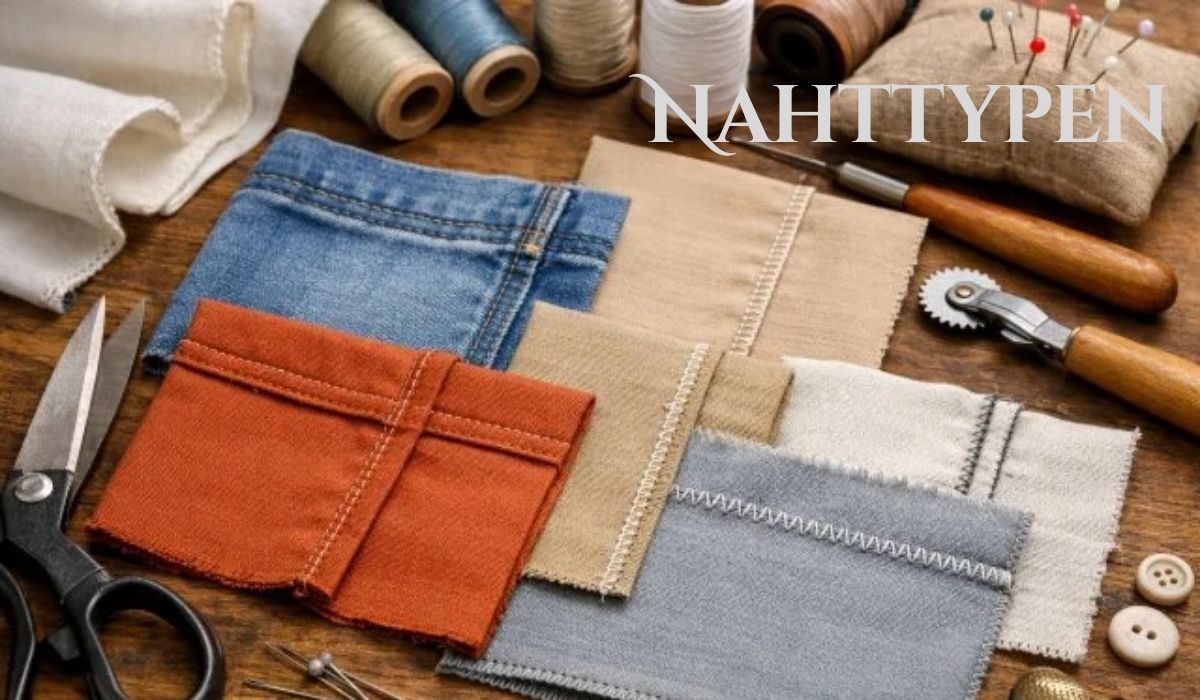
The plain seam is the most basic seam type in textile work. It is created by placing two pieces of fabric right sides together and stitching along the edge. After stitching, the seam allowances are pressed open or to one side.
This seam is widely used in shirts, dresses, and lightweight garments. It is simple and efficient. However, it may require finishing methods such as zigzag stitching or overlocking to prevent fraying.
French Seam (Französische Naht)
The French seam encloses raw edges inside the seam. It is created by sewing the fabric wrong sides together first, trimming the seam allowance, then folding and sewing again with right sides together.
This seam type is ideal for delicate fabrics like silk or chiffon. It creates a clean interior finish and prevents fraying. It is often used in high-quality garments and lightweight clothing.
Flat-Felled Seam (Kappnaht)
The flat-felled seam is strong and durable. It involves folding one seam allowance over the other and stitching it flat. The raw edges are fully enclosed.
This seam is common in denim jeans and workwear. It provides strength and prevents fraying, making it perfect for garments that experience heavy stress.
ALSO READ THIS :- Why Is Hothaylost Trending? Everything You Need to Know
Decorative and Functional Seam Variations
Beyond structural seams, there are decorative seam types used to enhance design. These seams add style while still serving a functional purpose.
Topstitched seams are an example. After creating a basic seam, additional stitching is added on the outer side. This reinforces the seam and creates a visible design element. It is commonly seen on jackets, jeans, and bags.
Another example is the bound seam. In this type, raw edges are covered with binding tape. This is often used in unlined jackets or sportswear for a neat finish. It improves comfort and prevents irritation.
Seam Types for Stretch and Knit Fabrics
Stretch fabrics require special seam constructions. Regular straight stitching may break when the fabric stretches. For this reason, knit garments use flexible seam techniques.
Overlock seams are widely used in T-shirts and sportswear. An overlock machine trims and stitches the edge at the same time. This creates a flexible and clean finish.
Coverstitch seams are another common option. They are often used for hemming stretch fabrics. This seam allows movement and maintains elasticity without breaking the thread.
Industrial Seam Applications
In large-scale textile production, seam selection follows strict standards. Factories test seam strength, thread quality, and stitch density before mass production begins.
Industrial sewing machines are designed for speed and consistency. Different machines are used for different seam types. For example, flatlock machines create flat seams used in performance wear. Heavy-duty lockstitch machines are used for woven garments.
Quality control teams inspect seams for skipped stitches, loose threads, and uneven tension. Proper seam construction ensures garments last longer and meet consumer expectations.
Seam Finishing Techniques
Seam finishing prevents fraying and improves garment longevity. While the seam type defines how fabrics are joined, finishing techniques protect raw edges.
Common finishing methods include zigzag stitching, pinked edges, overlocking, and binding. Each method suits different fabric types. Lightweight cotton may need simple zigzag stitching, while wool may require binding.
Finishing also affects appearance. A well-finished seam looks professional. It reflects attention to detail and improves the product’s value.
Factors That Influence Seam Choice
Choosing the right seam involves several considerations. Fabric weight, stretch level, garment function, and cost all matter.
Designers and manufacturers typically consider:
-
Fabric type and thickness
-
Garment purpose (casual, sports, formal, workwear)
-
Required durability and flexibility
-
Comfort and skin sensitivity
-
Production speed and cost efficiency
-
Washing and maintenance needs
Each of these factors influences which seam type is most appropriate for a specific project.
ALSO READ THIS :- Martie Allen: Everything to Know About Kristy McNichol’s Longtime Partner
Common Mistakes When Selecting Seam Types
Using the wrong seam can cause problems. For example, applying a plain seam to heavy denim may result in tearing. Using a rigid seam on stretch fabric may cause thread breakage.
Another common mistake is ignoring seam allowance. If the allowance is too narrow, the seam may weaken over time. If it is too wide, it can create bulk and discomfort.
Poor pressing techniques can also affect seam quality. Pressing helps seams lie flat and improves the garment’s final look. Skipping this step can make even a well-stitched seam appear uneven.
Seam Strength and Durability Testing
In professional textile environments, seams are tested before production. Strength tests measure how much tension a seam can handle before breaking.
There are also wash tests. These tests simulate repeated laundering to ensure seams do not shrink or distort. Abrasion tests measure resistance to friction.
Understanding seam performance helps manufacturers create long-lasting garments. It also reduces customer complaints and product returns.
Sustainability and Seam Construction
Sustainable fashion has influenced how seams are designed. Durable seam types reduce waste because garments last longer. High-quality stitching prevents early damage.
Repair-friendly seams are also gaining attention. Flat-felled seams, for example, are easier to reinforce. Designers now consider how easily a seam can be repaired when creating eco-conscious clothing.
Using the right seam also minimizes material waste. Efficient seam allowances and accurate stitching reduce fabric scraps during production.
The Future of Seam Technology
Technology continues to improve textile construction. Automated machines now create precise seam types with minimal human error. Some advanced systems use ultrasonic bonding instead of thread for certain fabrics.
Seam taping technology is widely used in waterproof garments. Special tapes are applied over seams to prevent water penetration. This technique is common in outdoor jackets.
As innovation continues, seam construction will become more efficient, durable, and environmentally friendly.
Final Thoughts
Nahttypen are fundamental to textile processing. They determine how fabrics connect, how garments perform, and how long they last. From simple plain seams to advanced industrial constructions, each seam type serves a specific purpose.
Understanding seam structures helps improve quality, comfort, and durability. Whether you are sewing at home or working in large-scale production, selecting the right seam type makes a significant difference. By learning how different seams function and where they are best applied, you can create stronger, more professional textile products.
FAQs
1. What are Nahttypen in textile production?
Nahttypen are different types of seams used to join fabric pieces. Each type serves a specific purpose depending on the fabric and garment design. They affect durability, flexibility, and appearance.
2. Which seam type is strongest?
Flat-felled seams are among the strongest. They are commonly used in denim and workwear because they enclose raw edges and provide reinforced stitching.
3. Why are special seams needed for stretch fabrics?
Stretch fabrics require flexible seams to prevent thread breakage. Overlock and coverstitch seams allow the fabric to stretch without damaging the stitching.
4. What is the difference between a plain seam and a French seam?
A plain seam joins fabric edges directly and may leave raw edges exposed. A French seam encloses the raw edges inside, creating a clean and professional finish.
5. How do manufacturers test seam quality?
Manufacturers perform tension, wash, and abrasion tests. These tests ensure seams can withstand stress, repeated washing, and friction.
6. Can seam types affect garment comfort?
Yes, seam construction directly affects comfort. Flat seams reduce skin irritation, while bulky seams can cause discomfort, especially in tight-fitting or activewear garments.
FOR MORE CONTENT: CLOCKMAGAZINE